Showing posts with label Daniel Pink. Show all posts

Tuesday, August 4, 2015

How Technology Can Foster Divergent Thinking in Our Students

By EdTechManiac, Darin Anderson

In his book Outliers: The Story of Success, Malcolm Gladwell lines out the differences between convergent thinking and divergent thinking by discussing two different types of questions.

raventest.net
The first question type, Gladwell explains, is the convergent kind, often used by prestigious universities and high-powered corporations to measure intelligence and aptitude of potential applicants and employees. Convergent assessments, such as the Raven's Test (or Raven's Progressive Matrices), developed by psychologist John C. Raven in 1939, are typically used to determine a person's IQ.

Raven's assessment gives users a series of multiple choice questions in the form of patterns, and they are to identify the shape that will complete the pattern. Simply stated, the convergent mind will be better able to decipher the patterns and ultimately end up with the single correct answer. From the total number of questions answered correctly, the test-taker is given a final IQ score. If it is high enough, Gladwell notes, he or she receives a free pass to Harvard, Cambridge, or another such institution. If it is too low...hello, State U!

Gladwell also touches on a second question type - those of a divergent nature. This style of questioning opens up opportunities for creativity and imagination, as well as analysis and cognition (landmarks of convergent tests). Outliers describes just such a question:
"Write down as many different uses that you can think of for the following objects:
1. a brick
2. a blanket"
The testing subject is then given a fixed amount of time to provide as many responses as possible. There are no "right" or "wrong" answers...just answers. Thus whatever direction(s) the test-taker chooses to go, the results are divergent.

A quick comparison between the two types of questions may lead to some of the following conclusions:
  • Only Smart people do well on convergent tests
  • Average and Below Average people do not excel on convergent tests - they're too hard for them
  • Smart people can also do well on divergent tests...because they are smart...Duh!
  • Average and Below Average people can do well on divergent tests because there are no wrong answers; they are fail-proof
  • Convergent tests are a better method of assessing intelligence than are divergent tests
  • Analysis and reasoning are more important to intelligence than creativity and imagination
I suppose in the world of "logical" thinking, these theories might pan out. However, before you draw your final conclusion, take a look at the divergent test responses of two people tested by Liam Hudson, a noted British psychologist:
  1. High School Student named Poole: (Brick) To use in smash-and-grab raids. To help hold a house together. To use in a game of Russian roulette if you want to keep fit at the same time (bricks at ten paces, turn and throw—no evasive action allowed). To hold the eiderdown on a bed tie a brick at each corner. As a breaker of empty Coca-Cola bottles. (Blanket) To use on a bed. As a cover for illicit sex in the woods. As a tent. To make smoke signals with. As a sail for a boat, cart or sled. As a substitute for a towel. As a target for shooting practice for short-sighted people. As a thing to catch people jumping out of burning skyscrapers.*
  2. High School Student named Florence: (Brick) Building things, throwing. (Blanket) Keeping warm, smothering fire, tying to trees and sleeping in (as a hammock), improvised stretcher.*
*Source: Gladwell, Malcolm. Outliers: The Story of Success. 1st ed. New York: Little, Brown and Company, 2008.

Given the choice to associate with either student, which of you would pick Poole and who would chum around with Florence?

Now, how about a closer look at their respective aptitudes?

Poole is defined in Gladwell's book as a student "in a top British high school," while Florence was described by Hudson himself as "a prodigy, with one of the highest IQs in his school."

Both able and willing, but, as Gladwell poses it, which student is more likely brilliant and creative enough to win a Nobel Prize?

Looking back at some of the most successful people of our time, we see names like Walt Disney, Martha Stewart, Steve Jobs, and Oprah Winfrey. Certainly, these folks, and hundreds of others, have exhibited a certain creativity and innovation along with astute cognitive abilities that helped them on their path to greatness.

But what about this list of similarly successful folks?
(L-R) Taylor Swift, Rhonda Rousey, Kevin Hart, and Lionel Messi (Highlights here!)
While this group exhibits notoriety in pop culture arenas, they each certainly display the same kinds of creativity that we look for in sports and entertainment figures. Those qualities and ideas have even crashed their way into the corporate world. Enterprises like Google, Microsoft, and Facebook are famous for offering - even requiring - their employees to spend time being creative. This freedom to explore and create without fear of failure has led to some groundbreaking technology that most of use daily without so much as a cognitive thought.

It is this kind of philosophy that should permeate each and every school system across our country. So much is said in education today about creativity, imagination, and risk taking...but nothing ever really has happened on any kind of large and meaningful scale. There is so much resistance to change.

However, the ball is rolling and it is gathering steam (S.T.E.A.M. - get it?) as is evidenced by the huge movement towards education technology and associated programs such as Ed Camps, Maker Movements, and Hack-a-Thons that pop up all over the country on an almost daily basis.

And that is the crux of my argument. Technology use - in and out of the classroom - can help foster divergent thinking in a way that was unheard even 5-10 years ago. Divergence has typically been seen as an anti-societal norm, especially by the so-called establishment. Going against normalcy was met with detention, suspension, or expulsion when in fact it could have been an opportunity for exploration and development. (Understand I am not talking about malicious behavior in school, although such is often exhibited as a result of boredom or irrelevancy of content in the classroom.)

Now that divergent ways of teaching, learning, and thinking are becoming more mainstream, educational technology is poised to make an even bigger splash.

Here are a few examples of how technology can help foster divergence in the classroom:
  • Collaboration with other like-minded users via social media. No matter how big or small one's location is, a student cannot always rely on having someone nearby who shares the same ideas and interests. With the ease of social media, students of all ages can find and reach out to others with similar goals and aspirations. In the case of October Sky, for example, how much would those boys have benefitted from social media contacts outside of West Virginia?
  • Access to various points of view. With careful and calculated consumption, our students can learn as much as they want about nearly any subject and from all angles. A wolf protector in Chicago, for example, may learn how the predator affects the very way of life for a farmer in the Intermountain West. Or an avid hunter might understand how some Native American cultures view certain animals.
  • Access to material that was once only available for the social elite. No longer must the teacher or the textbook be the sole sources of information. In fact, we have more access available to us in digital format now than ever before. In Good Will Hunting, there is a famous line that goes as follows: "You dropped 150 grand on a (expletive) education you could have got for $1.50 in late charges at the public library." First uttered in 1997, the words seem to be even more true now, and we don't even have to leave our couches!
  • Avoiding functional fixedness with online gaming. Growing up, you perhaps thought that your mother's sauce pan was made for just one thing...a drum, of course! Then one day, you had a crazy idea - what if you could make macaroni and cheese in the inside of your drum?? Viola! Functional fixedness destroyed. Daniel Pink is well known for his book Drive, in which he offers this set of pictures that depict and experiment conducted by psychologist Karl Dunker in 1945. The task was to attach the burning candle to the wall with only the thumbtacks. With some creativity, it becomes possible...as long as the box is seen as more than just a container for holding tacks. This kind of divergent problem solving is on display in a game called Limbo, available here. It's a bit dark, but it does get the job done. As do many, many other games.
The notion of divergent thinking is nothing new. However, encouraging our students (and teachers) to think that way has often been viewed as a bit of rebellion at worst, or non-compliance at best. Changing the perceptions of "it-worked-for-me" parents, community leaders, and legislators has been a struggle as well.

The fact is, while some aspects of traditional education are irreplaceable, so many others are outdated and irrelevant with 21st Century teachers and learners.

In the early 1900's, Robert Frost penned words that turned out to be well ahead of his time:
What if Frost's teacher had told him there was only one road to take?

Sunday, October 27, 2013

IPad Lit Circles: Daniel Pink, Aurasma, Wikispaces and Interclass Collaboration

While reading Daniel Pink's book Drive, I came across for me a very earth shattering passage. In his chapter entitled "The Rise and Fall of Motivation 2.0." Pink sets up a an interesting thought. To paraphrase, he asks his readers to imagine that it is 1995. He says, “I’m going to describe two new encyclopedias—one just out, the other to be launched in a few years. You have to predict which will be more successful in 2010.”
Below, I would like to set up his binaries.

Encyclopedia 1
Encyclopedia 2
Microsoft Funded
Doesn’t come from a company
Well paid Professional Writers
Written and edited by a thousands of people for fun.
Well compensated Managers
Contributors work 20 and sometimes 30 hours per week, for free.
Completed on time and on budget
There are no deadlines and no budget
Sold on CD Rom Later sold on the internet
The encyclopedia exists completely online and costs nothing

He continues saying "According to my crystal ball, in 2010, one of these encyclopedias will be the largest and most popular in the world and the other will be defunct."

Now, we are lucky to have the hindsight to know that Encyclopedia 1 is MSN Encarta, which Microsoft ended on October 31st, 2009, and Encyclopedia 2 is none other than Wikipedia.  Pink goes on to talk about why this is the case. I do not plan on getting into that today, however if you'd like to dive into that, I very much suggest you read Daniel Pink's Drive, or at the very least check out his Ted Talk.

After reading this, I wanted to test this out in a classroom setting. In our state, my Junior English Students are asked to do a lit circle at the end of the year. This body of educational evidence is known as "the Reader's Choice". In this assessment, students are to read a book of their choice and engage in class discussions surrounding theme, vocabulary, literary devices, special quotes and a handful of other topics. They are then asked to synthesize all of this information into a visual presentation.
I chose to do this a bit differently than what was done in the past.

All year long, we had done many group projects within classes. I felt like there were few combinations that I could make that hadn't already been done. So instead I took all 4 of my classes (this totaled roughly 105 students) and threw them all together in a pot. I wanted to see if I could have students working on a project completely online, and where they never once met face to face in person. I understand there are social aspects of group work that were missed here, but with our world operating on such a global scale, I thought this would definitely be a 21st century skill.

I began looking for an educational online platform where students could read, chat, post ideas,  and present their findings together. I essentially was looking for a wiki. I came across wikispaces.com.
I plan to post a few "how to's"  and specifics on what we were able to do with wkispaces. Suffice it to say, it had everything I needed and even things that I didn't know I needed that became essential to the process.

We essentially used 4 iPad apps for this activity:
Wikispaces
Bcontext
Aurasma
Todaysmeet

I will go through how we used all 4 of these programs in upcoming posts. This activity was extremely successful. Not just by my standards, but I used an anonymous poll and found that the kids really enjoyed it as well. The students mentioned that they "felt like (we were) doing something special every day." I also had one student say "I usually read something and then forgot it. With this project, I was able to see the progress and remember."
Our website, which I give complete credit to our students for what they created, was featured on wikispaces as an outstanding use of their software. As a representative of the class, I had the opportunity to do a google hangout with Wendy Gorton from wikispaces on how we used it in the classroom. You can check it out below.
Here is the article.

Below you can find the link to the wiki, if you'd like to check it out.

Mr. Einfeldt's Class Wiki Page

Friday, October 25, 2013

Failure: 20% Time, James Cameron, Nasa, and my first PG-13 movie by myself.

It was 1995, I was 13 years old, which meant one thing: PG-13 movies by myself. Having just moved to a fairly conservative Utah community, this right of passage could not be overstated. I had seen my fair share of PG-13 movies, but never by myself. I had planned this out down to the minute. On my birthday, which happened to fall in the summer, would include a small family gathering with cake and Mr. Pibb, following which my friends and I were going to go to a movie. This was what I told my parents. What I didn’t tell them was that we were meeting up with some girls, something completely forbidden by our parents. This was a pretty risky move on my part and required careful planning. We were to be dropped off by our parents at the theater at 6:30 for the 6:50 film. The girls were to be dropped off 10 minutes later to avoid overlap. The movie was Apollo 13, it was either that or Batman Forever. As a huge Batman fan, there are two things that fell incredibly short in my book, the recent announcement of Ben Affleck as the Caped Crusader and the entire Batman Forever Film (I refuse to acknowledge that Batman and Robin even exists, just as I refuse to acknowledge Rocky V). It was the right choice, and the plan was perfect.
We arrived at the exact time as planned. We went in, got popcorn, saved seats (boy/girl/boy/girl of course) and waited. 6:40 came and the girls didn’t. 6:50 and still nothing. Seeing as it was before cell phones, we played Paper/Rock/Sicissors (The correct form as it is in alphabetical order) to see who would go call and see if they had gotten lost. My lifelong buddy Zach, lost and headed out to the phone booth. He returned a few minutes later, midway through a trailer for Waterworld, shaking his head. The girls had chickened out. The fact that this could be a foreshadowing for my dating life is another topic for another post. However I remember sitting there being very disappointed, watching one of the greatest movies of the year. Each moment seemed to detail my early teenage angst.

At one point, as Ed Harris, playing Gene Kranz, is in a brainstorming room with other NASA members. They are trying to bring Tom Hanks, Bill Paxton and Kevin Bacon home. As they come up with a temporary plan, Kranz says “We have never lost an American in space and we sure aren’t going to lose one on my watch. FALURE IS NOT AN OPTION.”  I remember thinking at the time about how we had everything planned out perfectly with those girls, and if I had just planned it out better, I could have said to my buddies, the same exact thing.
This became a big phrase for me. I could have tattooed “Failure is Not an Option” on my forehead and it wouldn’t have been less on my mind than it was. I used it as I played sports in high school. I used it  as I dated my soon to be wife (thank goodness for that) and used it as I was in college and entered into the job field as a teacher. I even, to a certain degree, used it with the kids I taught and coached.
The problem came my first year of teaching.
I had some great experiences my first year. I met some fantastic kids, taught some fantastic lessons, and felt like I had made an impact albeit small, on the lives of most of my students. As I reflected on the year, however, I realized that there were a few parts of my curriculum that I wasn’t particularly strong at and it reflected on my students end of the year tests. Though most of my students did fairly well, and all passed, I felt like I had failed them at least a little bit.
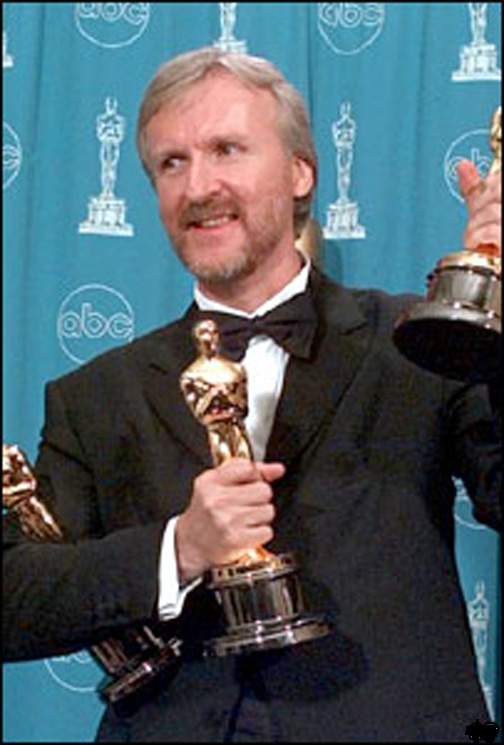
If failure wasn’t an option, then I was essentially a failure. That summer I came across a Ted Talk by James Cameron. Yes, James Cameron of the Avatar and Titanic fame. Yes, James Cameron, who was sung to in one of the greatest moments of Youtube history by Julian Smith. If you have 15 or so minutes, please check it out. It’s amazing. He essentially took most of what I had thought and had learned from in Apollo 13 and threw it in the garbage. James Cameron, one of the most creative film minds in history, said “Failure is an option.”
Now we have all heard the quotes from Edison about failure and Michael Jordan’s quote about failure was on a poster in my bedroom. However, do we really think this way? Do we really believe that failure can lead to success? If you were to look at our culture, I would argue that it is hard to see that being true. If you were to look at our schools and how we set up education, I would argue that absolutely does not foster this mindset.
Now, as I mentioned before, Daniel Pink’s book Drive has been very influential for me recently, however I want to somewhat eliminate the idea of algorithmic learning. Yes, it is important, and yes I do teach it and yes I do assess it. However, this is essentially easy to motivate and even easier to assess. For that reason, I feel that we as an educational entity lean more towards these styles of teaching and learning because they are a little easier to deal with.  On the other side of things, as Pink has detailed, our world is made up of some serious problems that can’t be solved using algorithms, but require creativity and problem solving beyond the set of currently constructed parameters.
I found myself in this crossroads. Not only did I want to show that it is okay to fail and get better, in my own situation, but I felt like it would be important for me to foster the same thing with my students. This is a huge question. How can you foster a level of creativity, where students can become lifelong learners, where they can have the freedom to try things out, in a system that is inherently “Failure is Not an Option” driven?
This year we have started working on 20% time. I have detailed this out in prior posts, however I just want to make sure that I state something in the process that I think cannot be overstated. James Cameron says “Curiosity is the most powerful thing you own. No important innovation was ever done without risk. Failure is an option, but fear is not.”  We have taken this on as somewhat of a motto for my kids and their projects.
   Let me explain. The students are to pick a project that they plan on working on all year long. There are some amazing things that they are all doing. Next week I will be posting some of these ideas. Suffice it to say, these kids are really blowing me away with their ingenuity, resourcefulness, and excitement to be and do something important. That being said, I have one student who has told me that he plans to build an engine, from scratch, that runs on natural gas. This is an amazing endeavor. We have looked on the surface about what this might require financially. Parts alone will cost at least $1500 not to mention the equipment needed to compress things and pressurize different parts of the engine. This is more than I can handle, and I would surmise on the surface that it is probably more than he can handle. My brain wants to tell him to not do this. I refuse to. I refuse to tell him no, because it is what he is passionate about and the work (writing, research, reading) that I anticipate getting out of him is more than I would ever get out of him in a traditional setting. He is already 100 pages into a book about how to do this. I guarantee that is 100 pages more than he has read in the last 2 years. For me, as long as he does that part, it is not a failure.
What I expressed to him is my confidence in his ability to figure things out. What I am preparing him for is the possibility that what he wants to do cannot be done. Rather than presenting to the class that he has failed, this particular student will present to the class the steps he took to realizing that this was more than he could do or handle. There is no failure here, there is merely detailing the steps of the process. I am actually more excited about seeing his presentation than some of the other ones. I am excited to see how far he is able to go.  I am excited to see what he does accomplish. I also look forward to the idea of him maybe trying again next year, or in five years or ten and finally figuring it out.
So here is my plan with my students and how I will assess their projects:
1. Each week they will post a blog post describing what they did in their project, what they are currently doing, and what they will be doing in the future.
2. These blogposts will be 200 words long and include at least one visual. I am allowing one vlog per month, however the script needs to be written before the post.
3. I will read/view each blog on Sunday night. I will comment and give ideas but I will not grade for content. It will be a “if you did it you get credit, if you don’t, then you don’t” type of an assignment.
4. I will be reading to find out if they are still having a good time with project and if they are still motivated to work on it. This will not have a grade value, but merely for my own personal assessment.
5. They will be asked to read and comment on 5 blogs per month. This will be graded on the same criteria.
I will help facilitate their projects by helping them get whatever resources they need to be successful. I will provide reading materials and help them create their own PLN and a Mentor for the process. Twitter will be key in creating this.  Learning from mistakes is paramount, however as we all know, if we can have somebody who can let us know about the road block before hand, it definitely makes the journey a little more smooth.
Below are some of the apps and programs that we will be using to power our 20% projects.
             

In hindsight, I learned a lot from that night at the theater. I learned that girls are generally smarter than guys, and these particular girls probably protected me from getting into trouble with my parents. I learned that NASA was actually pretty cool (I hadn’t thought that before that night). More importantly, however, was that I learned that sometimes even the best laid plans fall apart and that Michael Jordan and Thomas Edison were right. And of course, James Cameron is right when he said in his 2010 Ted Talk in Long Beach, California, “Curiosity – it’s the most powerful thing you own. Imagination is a force that can actually manifest a reality. NASA has this phrase that they like “failure is not an option,” but failure HAS to be an option, in art and in exploration. Because it’s a leap of faith. And no important endeavor that required innovation was done without risk. You have to be willing to take those risks. In whatever you’re doing, failure is an option, but fear is not.”

Tuesday, October 22, 2013

Star Wars, PBL, Goodwill Hunting, and 20% Time in My Classroom


A couple of years back I came to a stark realization that as a teacher, everything (and I mean everything, thank you very much, Kahn Academy) that I teach is taught on the internet and probably in a better way. I would liken this moment of realization probably to the moment when Luke found out that he had kissed his sister. I had felt like I had picked the wrong field. What did I do as a teacher that provided meaning to my students more so than what they could get from the internet?

One of my favorite scenes in modern cinema is the “How About Them Apples Scene” from Goodwill Hunting (Note: the aforementioned link has some mature language).  To paraphrase the scene Matt Damon argues with a Harvard undergrad about the economic structure of the pre-revolutionary war colonies. Matt Damon says in the argument, “You dropped 150 grand on an education that you could have gotten for a dollar fifty in late charges at the public library.” Now this isn’t to say that a college education is unnecessary; far from it. In fact the movie, I believe, argues that false dichotomy completely. I guess the realization I had and this particular scene both hit home for me as a teacher and make me wonder how or even if I can do more for my students than what they can get for $1.50 less than even Matt Damon had mentioned through the internet.

Last year I asked many of my students (Juniors and Seniors in High School) why they came to school. I was not surprising what their answer was. Far and away, the most common answer was friends and the social aspect. The second most common answer was to get into college. This is very encouraging. The third most common answer, however, was that they only came to school because their parents/the state/my probation officer is making me. Now, this wasn’t a controlled scientific poll, but just something I asked in a very informal way. However, it led me down a path of questioning myself. If, according to my generated data, less than 30% of my students were coming to school for an education, then that just wasn’t cutting it. I needed to find a way to motivate the others.

This summer I was lucky enough to have a google hangout with an amazing teacher by the name of Kevin Brookhouser. I could go on for days on how impressive he is and all his titles. He is a certified Google instructor, Certified iPad Instructor, English Teacher at a private school in California; his list goes on and on. He recently did a TED Talk on what is called 20% time. If you have a second, check it out.

One of the most important things I got from him, however was to read a book called Drive by Daniel Pink. What Daniel Pink suggests is that historically our best motivating tools, in business and schools, are carrots and sticks; meaning if you are good then you receive a sweeter carrot, if you are bad you get hit with a bigger stick. Carrots and stick, or extrinsic motivation, is not beneficial to properly motivate people today. At least not in the sense of promoting 21st Century Skills and real world creativity for solving real world problems. If you have about 15 minutes, check out his TED Talk as well, he can describe this better than I can, and he’s a tad bit more entertaining. Suffice it to say, he claims that carrots and sticks hinder creativity, rather than help it.

I was as guilty as any teacher at this. I would ask for creative responses and try to foster it by throwing out candy right and left. I would joke with my students and say that I was throwing tootsie rolls like Tebow throws footballs (This clip is a great one about muscle memory and bad habits–another topic for another day). I gave out treats for the most creative answers, and in return, probably stifled other creative responses. Granted, it was unintentional, but detrimental much the same.

I had remembered back into high school and college and all of my great teachers and lessons learned. Again, I will probably leave out some great teachers. That being said, I had a Visual Narratives course from Dr. Todd Petersen at Southern Utah University. This class was life changing for a million different reasons. But one specific reason was that I remember not caring what my grade was. I did not care how sweet the carrot was that I got at the end, nor did I care if I got hit with a big stick for failing. I enjoyed every second of it. I spent hours working on the class project, I put off other school work for his projects. While coaching JV basketball that year, I was often found working on this project on bus rides and even in the bleachers during our Freshman and Sophomore team’s games. I even specifically remember calling in sick to work once so that I could finish up a post I was doing on the class wiki regarding the Watchmen. Bear in mind, this assignment wasn’t extra credit, nor was it part of a specific grade for the class. To echo what Pink talks about, I actually gave up carrots (a hourly shift at a local pizza store) to be able to work on extra aspects of this class. I was motivated, invested and had no interest in the extrinsic reward yet I was extremely interested in the end outcome.
Pink talks about the three motivating factors for creativity: Autonomy, Mastery, and Purpose. He claims that people need to be in charge of what they are doing or at the very least how they do it. I have noticed this in the classroom. Many times students can’t get involved or engaged because they aren’t interested in the subject. Mastery, involves the aspect that the individual feel incremental improvement. It is not about perfection but seeing themselves get better. Finally, and in my opinion the most important, is purpose. Too many times students will complain by saying “when am I ever going to need to know this.” Giving them an actual real life purpose eliminates that.

Pink details many great companies leading the way in motivating their employees. Among these companies, Google, 3M, Facebook and a company named Atlasian that have given their employees 20% of their time to work on whatever projects they would like. These projects are later presented to the companies. The amazing thing is that after implementing this, the productivity has gone up and they have developed some amazing inventions as a result.
This is what I was looking for. This is what I want for my students. However, the question now becomes how to do this in my classroom. How can I turn my classroom into a place where they can create.
Here is my plan

  • Students will have every Friday to work on a project that is new to them and they are passionate about. Only 20 Time work can be done on Fridays.
  • Students will write a weekly blog post updating the world on how their project is doing.
  • Students will do a small presentation to the class at the end of the first semester to update the class on their work.
  • Students will do a final “TED” style talk at the end of the second semester to the class and any others that wish to attend during school.
  • Some students will be selected by students and staff to present at a “TED” style event after school hours that will be open to the community and streamed live.
  • (My personal favorite) Failure IS an option. As it says on Facebook Headquarters “Done is Better than Perfect”
Next week we will be incorporating Brookhouser’s Bad Idea Factory, an structure that is set up to eliminate aprehension and to help kick-start brainstorming efforts. They will then be asked to present their ideas to the class as well as the world. The class will help them decide if this project has worth or if they should retool it, repackage it, or junk it all together and try something else. Students will choose a mentor to help guide them through their project, but the vast majority of the work will be up to the students. I’m very excited to see the different types of projects students will come up with and all of the amazing things they will accomplish.


If you are interested in doing 20 Time in your class, please check out these resources. They were a huge help to me.

Kevin Brookhouser’s Website: http://www.iteachithink.com/


20 Time in Education - Watch the video and check out the site!


I’ll be tweeting about my adventures in 20 Time and you can follow them on the hash tag #20Time or the hash tag #geniushour or my specific tweeting #mre20time. Thanks for stopping by and please share any experience you have had with 20 Time in the comments below.