Showing posts with label Failure in Education. Show all posts

Thursday, April 28, 2016

There is Plenty of Room for Fun in Education


Perhaps the most powerful quote in this video is that it is okay to have fun while learning.
______________________________________

While too many educators these days eschew fun and enjoyment in their classrooms for the opportunity for students to complete wind-numbing worksheets, endure boring lectures, and pore over selected response items, it appears that some places have it about right.

Ron Clark is famous for two things:

1) Being portrayed by the dreamy Matthew Perry in the movie The Ron Clark Story.

2) Being an innovative, unstoppable, and ever-caring educator.

The video attached above is just one shining example of Clark's ability to cultivate a culture of love and caring and respect among students and staff at the Ron Clark Academy in Atlanta, Georgia.

While this particular post refers to Clark's ability to foster greatness where it would otherwise be nonexistent, it is really a message to all of us about working with kids and being a mentor and guide to their own greatness. All through an avenue of "meeting them where they are" and having some fun!

Here are four key points to keep in mind (while they are not necessarily new, they all need to be re-remembered):

1. Be prepared - Fun does not just happen. Okay, well it does. But if you want to engage your students in purposeful fun and games embedded into content, you must have a method to your madness.

2. Be real - Make mistakes in front of your students and, more importantly, show them how to properly react to mishaps. If you get bent out of shape at the onset of a problem, guess what? Instead, have fun with mistakes and make them learning experiences for everyone.

3. Be genuine - If you merely pretend to care about a kid, he will see right through you. Genuine caring is palpable, just as a bull storm is. Make it work with your personality. Not everyone can dance like Ron, but we all have some way to inject fun into our daily routine.

4. Be there - Even when you have a bad hair day, you have to give your best effort to your students. Woody Allen once said, "80% of success is showing up." As a teacher, however, this is only true if you follow the advice above.

Thursday, August 6, 2015

Lessons in Education Featuring Gary Larson: Part IV

Written by EdTechManiac, Darin Anderson

In the latest installment of our comical series, we will explore the concept of idea exploration in schools. Let's just hope that no one gets hurt in the process. ;-)


Among other things, Gary Larson is noted for using prehistoric figures to represent modern kinds of thinking. In this comic, we see a group of neanderthals exhibiting modern scientific principles (note the clipboard-holding caveman near the bottom) by conducting a controlled experiment.

What we also have before us is a comedic look at the sheer idiocy of tying a living being to the outside of a rock wheel.

Whether or not he has studied science, modern man understands the basic principles of physics, through experience mostly, and knows what is about to happen to the unsuspecting man...and so we laugh. (Granted, it shows how demented we can be as a society, but that is another story for another day.)

Looking at the paragraph above, which is the most important word to you? Science? Physics? Demented?

I contend that the single most important term is "Experience."

Now, look back at Larson's creation and ask yourself this question: 
Is it not true that the only reason we find humor in this comic is because these men do not have the background knowledge necessary to see an otherwise obvious tragic ending?
We are laughing at them because they do not know what we know. In that light, maybe it is not as funny anymore.

When put into educational terms, how many of our students walk into class knowing as much as WE know? How many of them have had the same depth of experiences as WE have had? The younger they are the less likely it is that they are aware of much of the content they learn about.

Schools often claim that they allow their students free range of exploration and experimentation - that they are free to make mistakes because that's how we learn. But then they are effectively held hostage by mandated testing that does not honor them for experimenting with the 4 answer choices. No standardized assessment that I know of allows students to make a choice, determine that it was the wrong option, and be able to go back and try again.

Or even worse, school and classroom environments create situations where risk takers and trendsetters are laughed at when they fail. Or ridiculed for trying to be "better" than their peers. Or told that being excellent makes others feel bad. Their experiences are controlled, to a certain extent.

Under similar environments would the airplane exist? Indeed, no one makes fun of the Wright Brothers for crashing plane after plane because society now takes advantage of their ultimate triumph everyday all over the world. We are grateful for their experiences and what their failures amounted to in the long run.


What about the kinds of technology we use on a daily basis? Would we all be pulling out our smartphones and strapping on wearable devices if developers around the world were given one single shot to create the touchscreen interface?

The trouble is that legislation and funding and school accreditation are all tied to some extent or another on static, one-shot assessments.

However, not all aspects of education revolve around standardized test scores. That which we do not control, we cannot change. So what can we do?

With educational technology, and many other teaching tools and strategies, we can create environments that foster creativity and exploration and that encourage experimentation. All of these serve to give our kids experience. Here are just a few ideas:
  • Learning Logs or Journals (Written or Audio) - In whatever format they may be, these student-created products provide so much more than just a running commentary of the process of learning. When used to their full potential, logs or journals can become a student's personal portfolio, full of examples of what works and what does not, reflection on successes and failures, and key understandings related to any academic experience. Some of the entries can be teacher recommended, but by and large, log content must be student-generated reflection and analysis. Digital formats, such as a Google Doc, allow for anytime access, which is a stark advantage over paper notebooks. Further, the written word is a vital component of learning, but no one is saying that the logs must be word-processed. Let your students record themselves over a series of PodCasts or audio messages available on most mobile devices and laptops.
  • Grading and Assessing Processes not Products - If all a teacher sees is a student's final product, which may or may not be a success, he is missing out on the whole story. Comparatively speaking, if someone only reads the final 15 pages of a novel, she is left with confusion and an uneducated opinion of the story as a whole. With the advantage of the above-mentioned logs or journals, that same teacher can get a snapshot, aside from classroom formative assessment, that helps give her a better understanding of the students' complete stories - she gets the whole picture.
  • Legal Hacking - The new definition and function of hacking is nowhere near the same as its predecessor, although many of the same skills are used. Today's hacking (aptly called hackathons) refers to brainstorming sessions put on by businesses across the world. Employees and other interested parties come together to code, with the intent of improving, creating, and/or exploring business software programs and other operations. Some companies sponsor time for employees to develop ideas for and work on new apps. Schools, and a few corporations, have taken the concept a step further and provide structured time for "hackers" to brainstorm solutions to local or regional problems, or to come up with ideas for improving, well, anything.
  • Bad Idea Factories and 20% Time Projects - Sometimes the best ideas come from horrible beginnings. The old saying goes that there is no such thing as a stupid question. The same can be said for bad ideas. Even if the result is worthless and/or dangerous, there is something to be learned from the process - if not the product. While I do not condone students burning down random structures to test Freud's Theory of Psychoanalysis (now THAT"S a bad idea), I am a advocate of the process of separating good ideas from not-so-good ideas; the thinking and creativity involved cannot be replicated any better. When classrooms across the country kick off 20% Time Projects, many of them begin with bad idea factories as a way to brainstorm and get ALL ideas out on the table. From those bad ideas grow fruitful endeavors - think manure as food for fruits and vegetables. The 20 Time projects speak for themselves as far as creativity, sustained reflection & analysis, and dealing with setbacks are concerned.
  • Teacher Modeling - This is far and away one of the best teaching strategies out there. Especially when it comes to the concept of learning from mistakes, when a teacher is willing to put him or herself out on the line and authentically "screw up" in front of a group of kids, an environment is being established. However, messing up and laughing it off is only step 1 of the process. From there teachers must explicitly model the additional concepts of reflection, revision, and the good ol' fashioned second try. Or third. Or fourth. It is this almost systematic grit and determination that we wish all kids develop and cultivate in school. Any of the above suggestions will work only if students and teachers are fully participating in the entire process of learning, not just checking in at the end of a unit or at test time.
After Grog gets mowed over by the stone wheel, instead of laughing at him or scolding his cohorts for a poor product and their "what-on-earth-were-you-thinking?" moment, we must revisit the occurrence in terms of what it would look like in the classroom.

Aside from stopping Grog and his buddies before they hurt someone, we should be praising the initiative and ingenuity of the group as it tries something new, or something more revolutionary that has never been done, if that's the case. All of these mini moments - micro-experiences let's call them - add up to create authentic macro-experiences that make a huge difference in the lives of our students.

Tuesday, August 4, 2015

How Technology Can Foster Divergent Thinking in Our Students

By EdTechManiac, Darin Anderson

In his book Outliers: The Story of Success, Malcolm Gladwell lines out the differences between convergent thinking and divergent thinking by discussing two different types of questions.

raventest.net
The first question type, Gladwell explains, is the convergent kind, often used by prestigious universities and high-powered corporations to measure intelligence and aptitude of potential applicants and employees. Convergent assessments, such as the Raven's Test (or Raven's Progressive Matrices), developed by psychologist John C. Raven in 1939, are typically used to determine a person's IQ.

Raven's assessment gives users a series of multiple choice questions in the form of patterns, and they are to identify the shape that will complete the pattern. Simply stated, the convergent mind will be better able to decipher the patterns and ultimately end up with the single correct answer. From the total number of questions answered correctly, the test-taker is given a final IQ score. If it is high enough, Gladwell notes, he or she receives a free pass to Harvard, Cambridge, or another such institution. If it is too low...hello, State U!

Gladwell also touches on a second question type - those of a divergent nature. This style of questioning opens up opportunities for creativity and imagination, as well as analysis and cognition (landmarks of convergent tests). Outliers describes just such a question:
"Write down as many different uses that you can think of for the following objects:
1. a brick
2. a blanket"
The testing subject is then given a fixed amount of time to provide as many responses as possible. There are no "right" or "wrong" answers...just answers. Thus whatever direction(s) the test-taker chooses to go, the results are divergent.

A quick comparison between the two types of questions may lead to some of the following conclusions:
  • Only Smart people do well on convergent tests
  • Average and Below Average people do not excel on convergent tests - they're too hard for them
  • Smart people can also do well on divergent tests...because they are smart...Duh!
  • Average and Below Average people can do well on divergent tests because there are no wrong answers; they are fail-proof
  • Convergent tests are a better method of assessing intelligence than are divergent tests
  • Analysis and reasoning are more important to intelligence than creativity and imagination
I suppose in the world of "logical" thinking, these theories might pan out. However, before you draw your final conclusion, take a look at the divergent test responses of two people tested by Liam Hudson, a noted British psychologist:
  1. High School Student named Poole: (Brick) To use in smash-and-grab raids. To help hold a house together. To use in a game of Russian roulette if you want to keep fit at the same time (bricks at ten paces, turn and throw—no evasive action allowed). To hold the eiderdown on a bed tie a brick at each corner. As a breaker of empty Coca-Cola bottles. (Blanket) To use on a bed. As a cover for illicit sex in the woods. As a tent. To make smoke signals with. As a sail for a boat, cart or sled. As a substitute for a towel. As a target for shooting practice for short-sighted people. As a thing to catch people jumping out of burning skyscrapers.*
  2. High School Student named Florence: (Brick) Building things, throwing. (Blanket) Keeping warm, smothering fire, tying to trees and sleeping in (as a hammock), improvised stretcher.*
*Source: Gladwell, Malcolm. Outliers: The Story of Success. 1st ed. New York: Little, Brown and Company, 2008.

Given the choice to associate with either student, which of you would pick Poole and who would chum around with Florence?

Now, how about a closer look at their respective aptitudes?

Poole is defined in Gladwell's book as a student "in a top British high school," while Florence was described by Hudson himself as "a prodigy, with one of the highest IQs in his school."

Both able and willing, but, as Gladwell poses it, which student is more likely brilliant and creative enough to win a Nobel Prize?

Looking back at some of the most successful people of our time, we see names like Walt Disney, Martha Stewart, Steve Jobs, and Oprah Winfrey. Certainly, these folks, and hundreds of others, have exhibited a certain creativity and innovation along with astute cognitive abilities that helped them on their path to greatness.

But what about this list of similarly successful folks?
(L-R) Taylor Swift, Rhonda Rousey, Kevin Hart, and Lionel Messi (Highlights here!)
While this group exhibits notoriety in pop culture arenas, they each certainly display the same kinds of creativity that we look for in sports and entertainment figures. Those qualities and ideas have even crashed their way into the corporate world. Enterprises like Google, Microsoft, and Facebook are famous for offering - even requiring - their employees to spend time being creative. This freedom to explore and create without fear of failure has led to some groundbreaking technology that most of use daily without so much as a cognitive thought.

It is this kind of philosophy that should permeate each and every school system across our country. So much is said in education today about creativity, imagination, and risk taking...but nothing ever really has happened on any kind of large and meaningful scale. There is so much resistance to change.

However, the ball is rolling and it is gathering steam (S.T.E.A.M. - get it?) as is evidenced by the huge movement towards education technology and associated programs such as Ed Camps, Maker Movements, and Hack-a-Thons that pop up all over the country on an almost daily basis.

And that is the crux of my argument. Technology use - in and out of the classroom - can help foster divergent thinking in a way that was unheard even 5-10 years ago. Divergence has typically been seen as an anti-societal norm, especially by the so-called establishment. Going against normalcy was met with detention, suspension, or expulsion when in fact it could have been an opportunity for exploration and development. (Understand I am not talking about malicious behavior in school, although such is often exhibited as a result of boredom or irrelevancy of content in the classroom.)

Now that divergent ways of teaching, learning, and thinking are becoming more mainstream, educational technology is poised to make an even bigger splash.

Here are a few examples of how technology can help foster divergence in the classroom:
  • Collaboration with other like-minded users via social media. No matter how big or small one's location is, a student cannot always rely on having someone nearby who shares the same ideas and interests. With the ease of social media, students of all ages can find and reach out to others with similar goals and aspirations. In the case of October Sky, for example, how much would those boys have benefitted from social media contacts outside of West Virginia?
  • Access to various points of view. With careful and calculated consumption, our students can learn as much as they want about nearly any subject and from all angles. A wolf protector in Chicago, for example, may learn how the predator affects the very way of life for a farmer in the Intermountain West. Or an avid hunter might understand how some Native American cultures view certain animals.
  • Access to material that was once only available for the social elite. No longer must the teacher or the textbook be the sole sources of information. In fact, we have more access available to us in digital format now than ever before. In Good Will Hunting, there is a famous line that goes as follows: "You dropped 150 grand on a (expletive) education you could have got for $1.50 in late charges at the public library." First uttered in 1997, the words seem to be even more true now, and we don't even have to leave our couches!
  • Avoiding functional fixedness with online gaming. Growing up, you perhaps thought that your mother's sauce pan was made for just one thing...a drum, of course! Then one day, you had a crazy idea - what if you could make macaroni and cheese in the inside of your drum?? Viola! Functional fixedness destroyed. Daniel Pink is well known for his book Drive, in which he offers this set of pictures that depict and experiment conducted by psychologist Karl Dunker in 1945. The task was to attach the burning candle to the wall with only the thumbtacks. With some creativity, it becomes possible...as long as the box is seen as more than just a container for holding tacks. This kind of divergent problem solving is on display in a game called Limbo, available here. It's a bit dark, but it does get the job done. As do many, many other games.
The notion of divergent thinking is nothing new. However, encouraging our students (and teachers) to think that way has often been viewed as a bit of rebellion at worst, or non-compliance at best. Changing the perceptions of "it-worked-for-me" parents, community leaders, and legislators has been a struggle as well.

The fact is, while some aspects of traditional education are irreplaceable, so many others are outdated and irrelevant with 21st Century teachers and learners.

In the early 1900's, Robert Frost penned words that turned out to be well ahead of his time:
What if Frost's teacher had told him there was only one road to take?

Friday, July 31, 2015

Lessons in Education, Featuring Gary Larson: Part II

By EdTechManiac, Darin Anderson

In Part II of our comical series on education reform, we examine two different ideas of education in need of some reform. Oh, and ducks...there will be lots of ducks.


Like most of Gary Larson's The Far Side comics, this particular frame offers both a superficial humor as well as a deeper, more philosophical meaning. In this post, I will offer my thoughts on both levels of understanding as they relate to education reform - or altering behavior in any aspect of our lives.

The initial humor is found is the obvious fact that ducks fly, but for some reason or another, this particular brace (look it up) has not yet lifted its wings to the air, so to speak.


Here, Bugs Bunny offers up a cruel bit of irony, at least where Daffy Duck is concerned. In order to save himself from disaster, all the duck has to do is flap his wings, or take advantage of his natural abilities. But he doesn't.

So too, we laugh at the blatant irony of the lead duck looking up at his peers with the sudden epiphany that they too could fly. In educational terms, it is similar to a student (or teacher) who observes his own peers completing any certain action and then thinks, I can do that too. Before long they are simply soaring.

Sometimes all it takes to leverage change is for an interested party - often it is an impressionable child or teenager, but it can be an adult as well - to closely observe the behavior of others and then mimic it. While it is not always that simple in actuality, many behaviors (movements, actions, procedures) can be reproduced on the basis of mental images  - let's call them mind-made movies - alone.

In his book entitled The Inner Game of Tennis, tennis pro Timothy Gallwey speaks of the battle between Self 1, our mind and ego, and Self 2, the part inside of us all that knows what to do if not interrupted by the conscious brain.

Gallwey explains his theory in the context of a tennis lesson he once gave: 
"My next lesson that day was with a beginner named Paul who had never held a racket. I was determined to show him how to play using as few instructions as possible; I'd try to keep his mind uncluttered and see if it made a difference. So I started by telling Paul I was trying something new. I was going to skip entirely my usual explanations to beginning players about the proper grip, stroke and footwork for the basic forehand.
"Instead, I was going to hit ten forehands myself, and I wanted him to watch carefully, not thinking about what I was doing, but simply trying to grasp a visual image of the forehand. He was to repeat the image in his mind several times and then just let his body imitate. After I had hit ten forehands, Paul imagined himself doing the same. Then, as I put the racket into his hand, sliding it into the correct grip, he said to me, "I noticed that the first thing you did was to move your feet." I replied with a noncommittal grunt and asked him to let his body imitate the forehand as well as it could.
"He dropped the ball, took a perfect backswing, swung forward, racket level, and with natural fluidity ended the swing at shoulder height, perfect for his first attempt! But wait, his feet; they hadn't moved an inch from the perfect ready position he had assumed before taking his racket back. They were nailed to the court. I pointed to them, and Paul said, "Oh yeah, I forgot about them!" The one element of the stroke Paul had tried to remember was the one thing he didn't do! Everything else had been absorbed and reproduced without a word being uttered or an instruction being given!"
Most of us self-identify as being visual learners, and this anecdote fully supports that idea. Our students and teaching peers can and do learn so much by closely watching those around them. I imagine that these ducks will be joining their brethren in the sky in no time...as long as no one intercedes and tells them they cannot or should not be doing so. Or worse yet, over-instructs to the point of confusion and discontent between Self 1 and Self 2.

Gallwey put it this way:
"...it is the constant "thinking" activity of Self 1, the ego-mind, which causes interference with the natural doing processes of Self 2. Harmony between the two selves exists when the mind itself is quiet. Only when the mind is still is one's peak performance reached."
While I do not know if anyone told these ducks to walk south instead of fly, it appears that their minds were indeed getting in the way. The old adage, "Spread your wings and fly," is more truth than fiction, at least in a philosophical sense.

How many children enter Kindergarten having been told over and over to not do this or to stop doing that? And once they gain entrance to the school walls do they not still hear the same tone on a daily basis?

Ask a duck. He knows the answer.
If a child wants to experiment with something new, whether it is a new piece of technology or simply a new way of completing a task, is she honestly given the freedom to do so? Educators preach ingenuity and creativity, but how many of us are actually willing to not just lighten up on the reigns, but to take off the halter all together?

Furthermore, how willing are we as educators to model the same kind of behavior by integrating something new into our respective classrooms? Technology. Behavior Management. Student Engagement.

If you think of the flying V formation as a peer you respect and admire - and yourself as a ground-bound duck - does it seem silly to you to NOT try and reach for higher climes? Of course we would make an attempt.

The capacity to excel exists in all of us  - even as most of us will never become as talented as Serena Williams or Roger Federer are at tennis. We do not all have to be given teacher-of-the-year awards to be considered great. But like hitting 9 out of 10 balls in the court is amazing, so to is believing in the children we teach.

Thursday, July 30, 2015

Lessons in Education, Featuring Gary Larson: Part I

By EdTechManiac, Darin Anderson

If we look hard enough, there are lessons about educational philosophy everywhere. One such place just happens to be the mind of famous cartoonist Gary Larson, author of The Far Side. His comic strip is at once irreverent, deep, and outrageously funny. And stock for points to ponder as we approach yet another school year.

There is an ages old activity that takes place in many classrooms across the country called Forced Association. Over a series of posts, we will use that strategy and examine a few of Larson's cartoons and discuss the themes, morals, and allusions contained therein.

Without further ado, here is installment No. 1 of Lessons in Education, featuring Gary Larson:

On the surface, this single frame comic tells the tale of a dog who puts in a subpar effort mowing his master's front lawn. While we find humor in the man ridiculously scolding his dog for a poor lawncare performance, if we stop to ponder its significance we find even more ironic laughter.

After all, if our dog could start the mower and exhibit success in pushing it across the grass, would we not be overly ecstatic? With a little training, Fido could be trained to produce finely manicured lawns all around town, pulling in a boatload of extra income. Not to mention the appearances on Oprah. And the reality TV show. And the book tour. And the blockbuster mov...

Oh, sorry, I got off track there. Back to Fido and the lesson he can teach us about education (or any other venture, for that matter).

Under similar circumstances, what would we prefer the man say to his adventurous dog so obviously full of initiative? (My dog never even offers to lift a finger to help. He just lifts a leg to cause more yardwork for me.)

To put it into an educational perspective, what do we say to a child who was willing to take a risk and try something new, but turned in a mistake-ridden product? Do we scold him and take away recess? Or, even more likely, do we assign a poor score, mark, or grade to him and make no bones about how awful the effort was compared to his peers?

The notion that all students must perform at or near the same levels in order to be "proficient" or "advanced" is a popular one in contemporary education. While I do not fully condemn the philosophy of having benchmarks for kids, I am also a human being who understands that not all students will excel at the same concepts and skills at the same time or in the same way. As much as we may say otherwise, I'm afraid that too many of us are still in the same data-measuring boat.

W. Timothy Gallwey, in his book entitled The Inner Game of Tennis, explains it this way:
"But who said that I am to be measured by how well I do things? In fact, who said that I should be measured at all? Who indeed? What is required to disengage oneself from this trap is a clear knowledge that the value of a human being cannot be measured by performance-or by any other arbitrary measurement. Like Jonathan L. Seagull, are we not an immeasurable energy in the process of manifesting, by degrees, an unlimited potential? Is this not so of every human and perhaps every life form? If so, it doesn't really make sense to measure ourselves in comparison with other immeasurable beings. In fact, we are what we are; we are not how well we happen to perform at a given moment. The grade on a report card may measure an ability in arithmetic, but it doesn't measure the person's value."
I contend that with any educational outpouring, whether it be technology implementation, Common Core Standards instruction, or standards based testing - to name just a few - we too often overlook the fact that our kids can do amazing things, even as they fall short of the arbitrary mark set for them by people who have and will never meet them.

Just as the dog in the comic should be praised for his willingness to take on something new, despite the "poor" outcome (based on whose standards, exactly??) our students must receive the same treatment for stepping beyond the usual.

Educators talk a big game about differentiation, student exploration, and creativity. But do we walk the walk when it comes to lavishing praise on those students who actually put themselves "out there" with a new idea, product, or action - no matter what the result? (The same lesson is true of so many school leaders who squash a teacher's willingness to try to be innovative, all in the interest of "classroom management" or "standards-based instruction.")

It is widely accepted that schools kill creativity in even our brightest youth because we are too busy telling them to mow the grass in nice straight rows, so to speak.

Gallwey sums it up nicely with this golden nugget from his book:
"...I see tennis players every day trying hard to correct their "faulty" games, and they learn at a much slower rate than the player who places his confidence in whatever potential is already within him and then lets it happen."
Remember these words the next time your dog does this:

Friday, May 8, 2015

The Play's (Not the Only) Thing: Taking Your Students to "Why"

"It is not just about playing, it is about asking why things happen. Design your lessons around questions to be explored and analyzed."

If the above line sounds like something you heard at an instructional design training, you are not alone. But it certainly is more difficult to implement such a concept on a day-to-day basis than it first appears.

This is what we know: 

The "play" engages and hooks the students. The experimentation and trial runs are much of what they experience in the world of computer gaming consoles and tablet apps. Failure, to those in this realm, is of no major concern because they just try again and again until the elusive prize or final level is attained.

This is where it perhaps gets a little fuzzy: Why the struggle and why the joy therein?

Discussions of why certain aspects of games result in (most often) failure and (ultimately) success are the bedrock of learning. Think about it: within each video game exists rich academic content including physics, algorithms, patterns, and more. Those, combined with authentic problem solving and critical thinking opportunities, make game play in classrooms an almost too-good-to-be-true learning environment.

Photo courtesy of ww2.kqed.org
Obviously, there is an extensive amount of research out there about the positives of game play, simulation activities, and the like. It is engaging for students, and for the most part, they like it. It represents an escape from the typical lecture-style classroom and it brings authentic activities to the forefront of learning. I mean, who does not want to show up and play games in class?

However, if game play ends there, keeping the kiddos engaged and busy, yet only assuming they are learning something, we are doing our students a monumental disservice. And too often, any planned discussion that accompanies game play is either irrelevant or entirely superficial in nature.

As far as CCSS and best practice are concerned, here is the charge: Instead of just assuming gamification will lead to deep student investment and academic discovery, educators must ensure students have an opportunity to discuss/analyze/determine why things worked as they did.
“We should be careful not to view learning technologies as a replacement for deep teacher and student interactions. We see effective technology supports as enabling the opposite,” said Stacey Childress, deputy director of education at the Gates Foundation.
The idea is to lead students in identifying, defining, and clarifying the processes that are naturally occurring in their minds as they navigate their way through games or simulations. With concrete terms and concepts out in the "cognitive wide open," it becomes easier for teachers and students together to hone the skills necessary to analyze and critique situations and become better problem solvers in all walks of life.

Topics to cover when working towards true classroom gamification:


After beating your high score
The psychology of gaming - or why certain computer-generated conundrums elicit specific and real human responses and actions. Examination of these responses would lay a foundation for meaningful classroom discussion in science and psychology courses about the power of brainwork.

Game Mechanics - there is more to playing a video game than just mindless shooting or searching for lost treasure. Indeed an entire battery of psychological, physiological, and social factors come into play as students become involved with a game. Discussing what make a gamer tick could result in some interesting theories to explore.

Determination and Grit - two qualities that are highly sought after in both the academic and business world. For sure, teachers and employers alike demand that students/workers exhibit strong work ethic and "stick-to-it-ivness" and repeatedly say that those two characteristics are at least as important, if not more important than, previous learning and experience.

Decision Making and Morals - researchers suggest that playing certain video games can in fact increase a person's capacity to make better moral decisions as he or she encounters "real world" situations. The jury is still out on the overall mental and spiritual gains to be made with gaming, but the fact that the topic is out on the table suggests that more and more people are recognizing that game play is not all bad.

Of course, the major miracle that is the human brain always has been and will continue to be a focus of study. For every child who increases cognitive capacity in part due to game play, there will be another whose failures are attributed to too much wasted time with a gaming console. The debate will rage on and on.

But here and now, this is what I content: No amount of meaningful and deliberate discussion about what is occurring in students' minds and why it affects thoughts and behavior will ever be wasted.

Simon Sinek so adeptly described this idea in his TED Talk "Start with Why."


As students are led through opportunities to determine not only WHAT is happening in and around them but also WHY, they will be building and honing the skills necessary to tackle whatever life throws at them.


So go ahead and game on!


My thoughts exactly.


And follow us @edtechmaniacs & @coachdarin22

Saturday, October 26, 2013

Sharknado, Bad Idea Factory, Olympic Curling and 20% Time in the Classroom


A few months back, July 11th, to be specific, I had just arrived home from a day of Project Based Learning training. Mostly because of a summer full of basketball camps, involuntary vacations, and teacher trainings, I hadn't had much of a break. I sat down on my bed, locked my door to the outside world and just wanted to "veg-out." As an avid sports fan, it was also a horrible time to be looking for sports, as it was a night of regular season baseball or probably some international curling championship. Naturally, my remote landed on the SyFy channel. It was the premiere of Sharknado.


I recently, in class, likened the beauty found in Gothic literature to my personal imitation of the Fresh Prince of Bel-Air doing the running man, and the decaying buildings in Detroit (These are all beautiful in their descent into destruction). I would also throw Sharknado into that category. Sharknado, for those who haven't heard of it (and if you haven't, then I would suggest selling the rock you've been living under and upgrading your humble abode) is a made for television B-grade disaster movie about a waterspout, or hurricane of sorts, that lifts sharks out of the ocean and deposits them in downtown Los Angeles. Starring the ever impressive Tara Reid, and my favorite 90210 star Ian Zeiring, this movie captured America as, according to NBC Universal, the show averaged 5,000 tweets per minute throughout the show. Now, it is important to understand that most of these tweets ranged from:
 to 
However, amidst all of these responses, There were a few others that looked like this:
 and

Throughout a personal viewing of this movie, I found myself jumping between the two thoughts of "How in the world is someone making money with this movie?" to "How ingenious is it that someone is making money with this movie?" There obviously can be a literary theoretical/philosophical debate about how culturally the binaries are flipping into a world where "bad is good" and masculinity now equals this; however that is not where I am going.

My point is, that often times out of obvious bad ideas, can come some pretty amazing things.

Again, I have detailed that my classes are working on their 20% time projects. I ran into a few problems. Despite my hope that all of my students knew exactly what they would do if given their freedom, as it turns out, this isn't entirely true. With that being said, I needed some ideas to help them come up with ideas.

I came across the Sharknado of brainstorming tactics. Using an idea I stole from Kevin Brookhouser which he stole from Karl Lindgren-Streicher, I decided to implement the Bad Idea Factory. What this is, in a nutshell, my students took the vast majority of en entire 50 minute class period, where they came up with the worst ideas possible for their projects. Bear in mind, I am teaching at a public high school and working with Juniors and Seniors. There were some bad ideas, and there were some "Bad" ideas. There were literally thousands of bad ideas. Here are some of the things they came up with:
  • A Zombie Board Game
  • Make a Lion your pet
  • Have a school wide mud fight
  • Ride a Hippo
  • Wear 2 left shoes for a week
  • Direct traffic on the freeway
  • Write a love song to a refrigerator
  • Play video games for 72 straight hours
  • Purpose marriage to a stranger on the street
  • Wear a dog collar and say it's your master's.
  • Play Marco Polo at Sea World
  • Talk only in acronyms
  • Make a motorized tricycle
  • Fill a pool with blue coconut juice
  • Learn to become a Sumo Wrestler
  • Eat a television
This is just a sample of what was described. The crazy thing about this activity is that within the bad ideas, came some pretty amazing things.

One group saw the idea of making a Zombie Board Game, and has decided to run with that. They are now learning the process of making board games and have now set up a time to meet with a game developer to find out how to pitch their ideas. I will post a link to their blog as things begin to develop.

Another student was dead set on writing a love song to a refrigerator.  After presenting this in the bad idea factory, his peers laughed. When he presented it to the class as his actual idea, they voted him down. When he presented it a second time with a deeper description, most everyone, myself included thought exactly what Greg Berlanti said about Sharknado: "Why didn't I think of that?"

This student presented to the class that he had always struggled with his weight. He felt the root of his struggles came from self esteem issues and feeling comfort in what was found in the fridge. To combat this he was planning on learning to play the guitar to improve his self confidence. In return he would like to write a satirical love song in which he eventually breaks up with his refrigerator. He plans to post this song, when completed, on youtube and I have no doubt in my mind that this video will soon go viral. The process that this student is going through, as he documents it, is impressive and what he is learning about (song structure, poetry, research on how to play a guitar and even writing letters to one of his guitar idols) is more work than I would have ever imagined seeing out of this great kid.

Now, this is how it worked:

At the beginning of class, I strategically divided my class up into groups. I use playing cards to do this as they walk in. This allows me to divide up based on numbers, colors, suits and a whole slew of different ways; this renders students trying to trade the cards to get their friends in their groups ineffective. As they got in their groups, I set up a competition, to come up with the most ideas, whether bad or good, as possible. No idea could be rejected. I joked with them and said that there was "no such thing as a dumb idea, only a dumb person." They laughed, but got the idea. I gave them a large sticky sheet and a few markers. i gave them a 30 minute timer and wandered around. At the 30 minute break, I had my students take their ipads and do a gallery walk. They had 10 minutes to go around, enjoy the crazy ideas, and then record on evernote 5 ideas that could be turned into good 20 time projects.

I gave them 3 thinking questions:
1. Could this idea be completely flipped and made into something positive?
2. With the right audience, could this be a good idea?
3. Could this idea in some way benefit another person?

To say this was my most enjoyable teaching experience of the year would be a bit of an understatement. My kids had fun, came up with some great (and not so great) ideas and were able to get a better grasp on what they could do for their projects.


I am really happy that we live in a world of Sharknados, and now its sequel Sharknado 2: The Second One, which will be coming out in July this upcoming year. I understand that this may not be an apt comparison, but I recall the reception of J.M. Barrie's presentation of the beloved Peter Pan. People thought he was crazy to be writing a play about kids who flew to a far away land with fairies, pirates, Indian braves and a hero who never grew up. Likewise, many turned down J.K. Rowling's initial idea of a boarding school for teenage witches and wizards. Without a few initial bad ideas, we may not ever get to something substantive.


Friday, October 25, 2013

Failure: 20% Time, James Cameron, Nasa, and my first PG-13 movie by myself.

It was 1995, I was 13 years old, which meant one thing: PG-13 movies by myself. Having just moved to a fairly conservative Utah community, this right of passage could not be overstated. I had seen my fair share of PG-13 movies, but never by myself. I had planned this out down to the minute. On my birthday, which happened to fall in the summer, would include a small family gathering with cake and Mr. Pibb, following which my friends and I were going to go to a movie. This was what I told my parents. What I didn’t tell them was that we were meeting up with some girls, something completely forbidden by our parents. This was a pretty risky move on my part and required careful planning. We were to be dropped off by our parents at the theater at 6:30 for the 6:50 film. The girls were to be dropped off 10 minutes later to avoid overlap. The movie was Apollo 13, it was either that or Batman Forever. As a huge Batman fan, there are two things that fell incredibly short in my book, the recent announcement of Ben Affleck as the Caped Crusader and the entire Batman Forever Film (I refuse to acknowledge that Batman and Robin even exists, just as I refuse to acknowledge Rocky V). It was the right choice, and the plan was perfect.
We arrived at the exact time as planned. We went in, got popcorn, saved seats (boy/girl/boy/girl of course) and waited. 6:40 came and the girls didn’t. 6:50 and still nothing. Seeing as it was before cell phones, we played Paper/Rock/Sicissors (The correct form as it is in alphabetical order) to see who would go call and see if they had gotten lost. My lifelong buddy Zach, lost and headed out to the phone booth. He returned a few minutes later, midway through a trailer for Waterworld, shaking his head. The girls had chickened out. The fact that this could be a foreshadowing for my dating life is another topic for another post. However I remember sitting there being very disappointed, watching one of the greatest movies of the year. Each moment seemed to detail my early teenage angst.

At one point, as Ed Harris, playing Gene Kranz, is in a brainstorming room with other NASA members. They are trying to bring Tom Hanks, Bill Paxton and Kevin Bacon home. As they come up with a temporary plan, Kranz says “We have never lost an American in space and we sure aren’t going to lose one on my watch. FALURE IS NOT AN OPTION.”  I remember thinking at the time about how we had everything planned out perfectly with those girls, and if I had just planned it out better, I could have said to my buddies, the same exact thing.
This became a big phrase for me. I could have tattooed “Failure is Not an Option” on my forehead and it wouldn’t have been less on my mind than it was. I used it as I played sports in high school. I used it  as I dated my soon to be wife (thank goodness for that) and used it as I was in college and entered into the job field as a teacher. I even, to a certain degree, used it with the kids I taught and coached.
The problem came my first year of teaching.
I had some great experiences my first year. I met some fantastic kids, taught some fantastic lessons, and felt like I had made an impact albeit small, on the lives of most of my students. As I reflected on the year, however, I realized that there were a few parts of my curriculum that I wasn’t particularly strong at and it reflected on my students end of the year tests. Though most of my students did fairly well, and all passed, I felt like I had failed them at least a little bit.
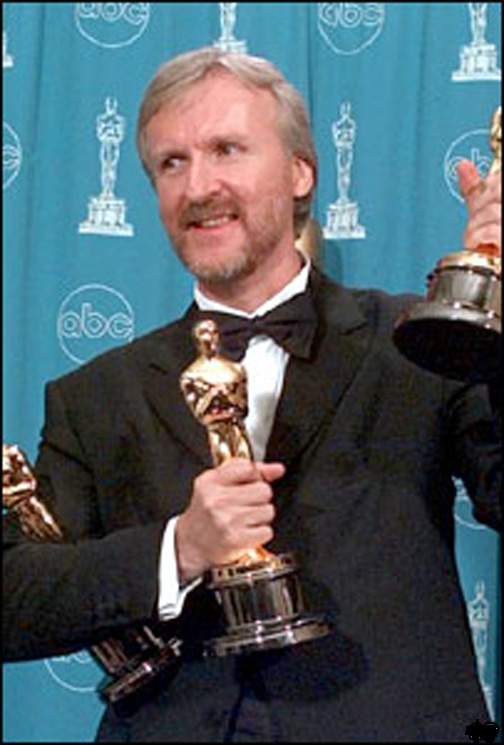
If failure wasn’t an option, then I was essentially a failure. That summer I came across a Ted Talk by James Cameron. Yes, James Cameron of the Avatar and Titanic fame. Yes, James Cameron, who was sung to in one of the greatest moments of Youtube history by Julian Smith. If you have 15 or so minutes, please check it out. It’s amazing. He essentially took most of what I had thought and had learned from in Apollo 13 and threw it in the garbage. James Cameron, one of the most creative film minds in history, said “Failure is an option.”
Now we have all heard the quotes from Edison about failure and Michael Jordan’s quote about failure was on a poster in my bedroom. However, do we really think this way? Do we really believe that failure can lead to success? If you were to look at our culture, I would argue that it is hard to see that being true. If you were to look at our schools and how we set up education, I would argue that absolutely does not foster this mindset.
Now, as I mentioned before, Daniel Pink’s book Drive has been very influential for me recently, however I want to somewhat eliminate the idea of algorithmic learning. Yes, it is important, and yes I do teach it and yes I do assess it. However, this is essentially easy to motivate and even easier to assess. For that reason, I feel that we as an educational entity lean more towards these styles of teaching and learning because they are a little easier to deal with.  On the other side of things, as Pink has detailed, our world is made up of some serious problems that can’t be solved using algorithms, but require creativity and problem solving beyond the set of currently constructed parameters.
I found myself in this crossroads. Not only did I want to show that it is okay to fail and get better, in my own situation, but I felt like it would be important for me to foster the same thing with my students. This is a huge question. How can you foster a level of creativity, where students can become lifelong learners, where they can have the freedom to try things out, in a system that is inherently “Failure is Not an Option” driven?
This year we have started working on 20% time. I have detailed this out in prior posts, however I just want to make sure that I state something in the process that I think cannot be overstated. James Cameron says “Curiosity is the most powerful thing you own. No important innovation was ever done without risk. Failure is an option, but fear is not.”  We have taken this on as somewhat of a motto for my kids and their projects.
   Let me explain. The students are to pick a project that they plan on working on all year long. There are some amazing things that they are all doing. Next week I will be posting some of these ideas. Suffice it to say, these kids are really blowing me away with their ingenuity, resourcefulness, and excitement to be and do something important. That being said, I have one student who has told me that he plans to build an engine, from scratch, that runs on natural gas. This is an amazing endeavor. We have looked on the surface about what this might require financially. Parts alone will cost at least $1500 not to mention the equipment needed to compress things and pressurize different parts of the engine. This is more than I can handle, and I would surmise on the surface that it is probably more than he can handle. My brain wants to tell him to not do this. I refuse to. I refuse to tell him no, because it is what he is passionate about and the work (writing, research, reading) that I anticipate getting out of him is more than I would ever get out of him in a traditional setting. He is already 100 pages into a book about how to do this. I guarantee that is 100 pages more than he has read in the last 2 years. For me, as long as he does that part, it is not a failure.
What I expressed to him is my confidence in his ability to figure things out. What I am preparing him for is the possibility that what he wants to do cannot be done. Rather than presenting to the class that he has failed, this particular student will present to the class the steps he took to realizing that this was more than he could do or handle. There is no failure here, there is merely detailing the steps of the process. I am actually more excited about seeing his presentation than some of the other ones. I am excited to see how far he is able to go.  I am excited to see what he does accomplish. I also look forward to the idea of him maybe trying again next year, or in five years or ten and finally figuring it out.
So here is my plan with my students and how I will assess their projects:
1. Each week they will post a blog post describing what they did in their project, what they are currently doing, and what they will be doing in the future.
2. These blogposts will be 200 words long and include at least one visual. I am allowing one vlog per month, however the script needs to be written before the post.
3. I will read/view each blog on Sunday night. I will comment and give ideas but I will not grade for content. It will be a “if you did it you get credit, if you don’t, then you don’t” type of an assignment.
4. I will be reading to find out if they are still having a good time with project and if they are still motivated to work on it. This will not have a grade value, but merely for my own personal assessment.
5. They will be asked to read and comment on 5 blogs per month. This will be graded on the same criteria.
I will help facilitate their projects by helping them get whatever resources they need to be successful. I will provide reading materials and help them create their own PLN and a Mentor for the process. Twitter will be key in creating this.  Learning from mistakes is paramount, however as we all know, if we can have somebody who can let us know about the road block before hand, it definitely makes the journey a little more smooth.
Below are some of the apps and programs that we will be using to power our 20% projects.
             

In hindsight, I learned a lot from that night at the theater. I learned that girls are generally smarter than guys, and these particular girls probably protected me from getting into trouble with my parents. I learned that NASA was actually pretty cool (I hadn’t thought that before that night). More importantly, however, was that I learned that sometimes even the best laid plans fall apart and that Michael Jordan and Thomas Edison were right. And of course, James Cameron is right when he said in his 2010 Ted Talk in Long Beach, California, “Curiosity – it’s the most powerful thing you own. Imagination is a force that can actually manifest a reality. NASA has this phrase that they like “failure is not an option,” but failure HAS to be an option, in art and in exploration. Because it’s a leap of faith. And no important endeavor that required innovation was done without risk. You have to be willing to take those risks. In whatever you’re doing, failure is an option, but fear is not.”