Showing posts with label PBL. Show all posts

Friday, May 13, 2016

Seeing the Forest AND the Trees: Student Exploration Time


By Darin Anderson

Picture this: You arrive for your first painting lesson from a renowned local artist. Before you lay all the materials you need to begin creating your first masterpiece.

As you settle in with your surroundings, in walks the artist, who begins visiting with each participant about the beauties of art and painting.

You simply cannot wait to get started.

Monsieur Paintbrush walks to the front of the room and begins speaking to the group about the endless possibilities of paints and palettes and prisms of color. He continues into very interesting dialogue about purpose and passion, and you become even more excited to fill your empty canvas with wonder.

However, as the minutes pass by, you notice the instruction, while incredibly valuable and inspiring, has left you no time to do what you came for.

As the artist bids you a find adieu, you leave your still blank canvas and pristinely clean brushes behind, hoping for a chance - next time - to work wonders with them.
_______________________________________________

Would you stand for such circumstances? Regardless of whether or not you paid a fee for the class, I'm certain you would be disappointed with the outcome. Why, you never even got to open up the paints!

Imagine the thousands of students who walk in and out of thousands of classrooms each school day with the same emotions - "Sounds cool, but I never even got a chance to try it out!"

Now, imagine yet another situation - similar and just as frustrating to our students:

Monsieur Paintbrush walks to the front of the room and instructs you to follow his lead in painting a red flower. He takes you step by step through the process, even stopping the class to ensure that each participant neither speeds ahead or lags behind. "We all must build the red flower as I do," he says.

Since you are a decent painter who has done his or her share of flowers, bushes, and trees, you begin to become antsy and annoyed at the teacher for not letting you "do your own thing" and paint what you want. But in the interest of staying with the group you decide to just remain silent and paint your red flower.
_____________________________________________________

While I understand the need for direct instruction and scaffolding in classrooms, I believe that we often go overboard with controlling the scenario in the interest of classroom management and, honestly, making our own lives as teachers easier.

However, many of our students leave classrooms each day without having had the opportunities to explore and design and create and tinker with (insert content/skills here).

Think of the tools we have in our classrooms that are metaphorically represented by the canvas, brushes, and paints in our story:
Computers and laptops
iPads and other tablets
Video cameras
Student Smartphones
3D Printers (perhaps)
CNC Machines (perhaps)

Not to mention these:
Glue
Scissors
Cardboard
Paper
String
Plutonium (according to Dr. Emmett Brown, it should be readily available these days)

But those "standard issue" tools are only the beginning. Think of a computer (or other device) as a box of toys. In and of itself it is a container with little practical use. However, the inside holds the wonders of the world (and I'm not talking about word processing programs).

For example:
+ Google Hangouts or Skype allows staff and students access to content area experts all over the world.
+ 3D programs such as Tinkercad and Thingiverse make design and creation easily accessible for users.
+ Video and audio creation programs allow students to express themselves as never before.
+ 24/7 discussion and collaboration are a snap with Google Drive and a wide variety of social media outlets.

But here I am preaching to the choir. Or am I?

Please take to heart the memes inserted in this post. Ensure that on a daily basis you are having your students explore, create, design, and tinker with content, skills, and - most importantly - their own thoughts and ideas.

Our world - and their - will be the better for it!

Sunday, April 24, 2016

Does a Successful Maker Project Mean Success on a Standardized Test?

So you have straws and tape and tennis balls all over your classroom workspaces. Your students are

diligently scrounging Google Images for ideas and Internet links to help them construct the tallest and strongest towers possible.

Each team member is actively involved in research, design, and revision processes, and all the while you marvel at their engagement and learning. It is iteration at its teenage best!

You sit back in your desk with your feet up (your principal just left the room, so it's safe) and take a quick moment to reflect on the project. A huge smile extends across your face and you take a quick selfie to post on Instagram. #ToY

Then a sudden realization leaves you frozen and breathless...your state science exam window opens tomorrow and you completely neglected to spend class time doing test prep.

Are your kids ready??

As you begin sinking in despair, you think back over the past several weeks when your students were researching, designing, collaborating, and building. The project results were amazing. The lab and project reports were spot on. The data checked out and the charts and graphs were nothing short of lab-worthy.

Are my kids ready? you ask yourself.

Another smile crosses your face. You know they will blow this test out of the water. For they are prepared.

You know that most standardized assessments are written at a DOK 1-2 level; they are based largely on recall and basic application of content and/or skills.

Students in your classroom have been working well beyond these levels for the better part of the school year. Not only could they recall it...they could fold it, fly it, print it, connect it, and, if the area was secure enough, blow it up!

You know your maker projects, your design challenges, and your project-based learning units have more than prepared your kids for success in some dumb 'll irrelevant test.

You have prepared them with the knowledge and skills that colleges and corporations want and need.
That is why you forgot about the silly state exam.

You were busy doing so much more for your kids.

Monday, April 4, 2016

Are After-School Programs Doing the Jobs that Schools Won't?

Perhaps you have experienced this story...

Your kid comes home from school, joyously speaking of a wonderfully new activity that will allow her to explore and create and laugh and have fun - all while learning about science and math and engineering and all of the other good stuff that happens in a child's life.

Excited for her new-found interest in academics, you ask her when this school project will begin.

She opens her backpack and produces a large stack of papers, including math worksheets and artistic renderings of beasts and animals of every unimaginable kind. After rifling through the sheets for a few moments, she pulls out a purple flier and excitedly thrusts it out for you to see.

You look at it and your heart begins to sink. Instead of her school - the place in which she spends upwards of 8 hours a day - taking on this new and exciting and engaging project, you find that the United Association of Motherly Knights of Cincinnati are asking you to pony up a $75 "one-time" fee to have your precious daughter spend two nights a week at the local kids' club making, designing, and creating all kinds of science-y and math-y and engineering-y things.

If this is your story, sadly, you are not alone.

Across the country, our students are being relegated to national standardized testing, state-mandated assessments, and a wide variety and voluminous sets of school and classroom work... none of which I have a real problem with (but that is a different story for a different post).

What I am speaking more about is the manner in which many of our school approach the teaching and learning of academic concepts.

While the phrase "death by worksheet" is not the stuff of student lamentations in all schools in our country, there is a fair amount of academic institutions unwilling to make the break away from an antiquated system and move forward into engaging, high interest, and student-driven educational models such as PBL, inquiry-driven instruction, and makerspaces - to name just a few.

In the mean time, after-school programs offered by many local clubs and organizations have stepped in to fill the void of fun and excitement towards learning left by the monotony of funeral rows of desks in classrooms with lots of potential otherwise.

What's worse, many of these programs are funded and facilitated by the school districts themselves.
Kennedy Space Center Education Foundation
In effect, they are telling their constituents, "While we are mostly unwilling to provide students with quality and engaging classroom instruction during the day - our schedule and testing demands simply won't allow it - we are more than happy to offer an after-school program designed to provide your students (well, some students, as we are limited by funding to only 20 kids) with activities specially designed to expose them to STEM & STEAM concepts, all in a fun, yet structured environment."

My beef boils down to this:

If innovative after-school programs (and let's not forget summer school session designed to try something "new and different" for our struggling students) are yielding good results with high praise from kids, parents, and staff, why aren't schools clambering to the front of the line to get on board this train?

To be fair, I am not condemning education in general. While the minority may neglect their duties and responsibilities, most teachers and staff are putting forth a great and noble effort towards the students in their charge.

I am simply saying that we can all do better with the time and resources we have. If it is training we lack, there are no small numbers of "experts" willing to lend time and information. If it is initiative we are without, there are those out there who can lead and inspire us, whether in person or via social media and the like. (When WAS your last Twitter EdChat??) If it is resources we need, there are many who have traveled this path before who are willing to either shine the way or return and walk side-by-side with us.

It is not easy and we will face criticism from those who do not understand, but the majority will see the change for what it is. We talk often about doing what is best for kids. Here is YOUR chance. Get started today.

To quote a very intelligent and inspired leader, T.S. Monson, "Let us always choose the harder right rather than the easier wrong."

Friday, January 29, 2016

Maker Education and the Common Core: Closer Than You Might Think

With Common Core State Standards being the driving force in education in The United States over the past several years, much attention has been paid to the subject of teaching and assessing our students based upon CCSS.

Due directly to both Federal and state mandates, our nation's education system has been bombarded with resources, curriculums, and programs designed to better teach Common Core and prepare our students for a new battery of standardized testing "options" designed to measure growth towards nationwide proficiency.

The added stress (to an already taxing field of work) has resulted in teachers and students alike growing tired and more disillusioned to the concepts of school, education, and learning - especially considering the following:
  • In 2015, an estimated $950 billion of Federal, state, and local money was spent on education in the United States (according to usgovernmentspending.com). That number is expected to exceed $1 trillion by 2017.
  • On average, US students are required to take 112 standardized assessments throughout their K-12 years, ranging from nearly 5 hours of testing per year for Kindergarteners to over 25 hours for our nation's 8th graders (see article about Council of Great City Schools study here).
  • Despite large sums of money being appropriated to schools - and an emphasis on assessments to measure growth and school/teacher effectiveness - longitudinal test scores have remained largely flat (see Politifact Virginia article here).
In other words...water is wet.

At the same time, educators have seen major moves towards gamification in the classroom, project or passion-based learning, STEM and STEAM Maker education, computer coding and many, many other non-traditional approaches to teaching and learning.

The desire to engage students in educational material, creativity, and collaboration (among other learning facets) seems, in some circles anyway, to overshadow the mandates of state and federal monitoring of student achievement.

The cry?

"While students are having fun making rockets and visiting zoos and playing Minecraft," critics claim, "they are not learning anything. And the test scores prove it. Our time, and the students' time, is better spent on covering meaningful content and prepping them for measurable assessments. We have the Common Core and we need to focus on student achievement and progress towards meeting those standards. Etc. Etc."

Stop me if you've heard that argument before.
_______________________________________________

For a dissenting (in a good way) voice I give you Sylvia Martinez and her stance on CCSS and the "Deeper" Learning:
"I get asked a lot about how making and tinkering can be integrated into classes in light of the Common Core. I think there are good answers to this, but it involves seeing the Common Core as something more than it is being portrayed in the media and in schools. 
"Simply, there are three parts to the Common Core – the overarching goals, the standards, and the assessments. I’m not going to go into great detail about each of these, but here is what I see happening in a lot of schools in each of these areas. 
"Assessment – Tremendous effort is being put into getting students ready to take the assessments and preparing the technology infrastructure to administer the tests. 
"Standards – New standards are driving changes to curriculum, but mostly in a rearrangement or rebranding of existing curriculum and classes. 
"Overarching goals – Very little is being done to address the goals of changing how and what we teach students by making it more relevant, more experiential, and requiring deeper dives instead of “covering” too many topics. 
"This is the problem I’m seeing – that assessment is the tail wagging the dog and taking the focus (not to mention money and time) away from changing classrooms for the better. So when we talk about how “making” can align with Common Core, it requires schools and districts to refocus on those overarching goals, and away from how many computers you need to run the tests.  Unfortunately this is a conversation that is not taking place in many educational organizations."
In short, Martinez is claiming that school systems are so entrenched in testing their kids that they forget to educate them. But again, stop me if you've heard this one.

If we are to teach/students to learn the necessary standards to the necessary depths, I contend that more must be done than simply offering up a common assessment every now and then or administering a bevy of benchmark exams at semester's end.

What follows is a short but poignant snippet of a recent Twitter chat, from our friends in Montana and #MTedchat

The question was this:
To help further Martinez's stance on teaching beyond the exact wording of the standards, this was my response:
 Here are a few responses Tweeted out during the discussion:

In order to reach that ceiling, there is much construction we must do on the open floor space below.
While few educators disagree with the notion of Project-Based Learning, STEM, Maker Ed and the like, their implementation has been much more difficult to bring to pass - mainly because of the over-emphasis on rote testing at local, state and Federal levels. The message has been, "If your pet projects do not address the standards, you will have to give them up."

As a result, many teachers have burned bridges on building bridges, and fill their time instead on bubble sheets and #2 pencils.

However, here is some good news. As it turns out, there is a fairly logical way to bridge the gap between accountability towards Common Core (plus other standards) and "non-traditional" educational ventures.

The connection is best illustrated by using an example of a stalwart activity that has been popular amongst teachers and summer camp counselors across the world - The Tennis Ball Tower Challenge.

Often used as a teambuilder or icebreaker, the Tower Challenge may give surface appeal as a fun yet shallow activity. However, with some careful implementation, it can indeed unfold into a full blown, Common Core, #DeeperLearning, Maker Education crowd pleaser.
Follow the link to the right for access
to a Maker/CCSS example project.

Take a look at this link for a spreadsheet that shows the correlation between steps of the Engineering Design Process (used for the tower building protocol) and Common Core ELA Standards. (Similar outcomes are possible, of course, with Math and Science Standards as well.)

The ultimate outcome of any lesson, activity, or project that teachers have students complete must be related to student achievement and academic and/or personal growth. Maker Education teaches and hones success skills.

Beyond simply having fun with school projects, our students deserve so much more. Maker Education - connected purposefully to Common Core Standards - is just what the doctor ordered.

Happy making, everyone!

Follow me on Twitter for more EdTech, MakerEd, and EdReform dialogue.

Wednesday, October 30, 2013

Using Tech to Foster Student Inquiry


Pop Quiz: How many times has any given student, upon admitting defeat, exclaimed, "Just give me the answer!!"?

The answer is...well, all of them.

I see 2 problems with this kind of response. First, this given student has probably not been taught true self-inquiry and/or self-advocacy. Perhaps he or she has no grit or determination to see things through. 

Secondly, the questions themselves may not lean towards a spirit of inquiry. Too often the child is asked to find the single "correct" answer in the abnormally sized haystack. And the teachers take great joy in devising questions that are so "rigorous" (read: tricky) that only one person in the world knows the answer to it. How fair is that?

I understand that students will be students and laziness does exist. But what good does it do to send anyone on a wild goose chase for answers to close-ended questions?

Enter the edtechmaniacs' solution.

#1) Ask them an inquiry based question. In PBL it's called the driving question. A good DQ will open the door to their own answers. (See video)

#2) Teach them how to use technology to seek answers. Have them find a professional or expert on Twitter or Facebook. Scour Wikipedia (yes, I said it) for sources to scour even more. Use Skype to conduct a live chat with someone in Europe. Get everyone involved with Skype Classroom. Students and teachers from all over are itching to get together via Skype's new education program.

Please take some time to visit or acquaint yourself with these websites and programs. Teaching responsible use and turning students loose, will go a long way towards the students finding their own answers.

No Needle. No Haystack.  No upset students.


Sunday, October 27, 2013

IPad Lit Circles: Daniel Pink, Aurasma, Wikispaces and Interclass Collaboration

While reading Daniel Pink's book Drive, I came across for me a very earth shattering passage. In his chapter entitled "The Rise and Fall of Motivation 2.0." Pink sets up a an interesting thought. To paraphrase, he asks his readers to imagine that it is 1995. He says, “I’m going to describe two new encyclopedias—one just out, the other to be launched in a few years. You have to predict which will be more successful in 2010.”
Below, I would like to set up his binaries.

Encyclopedia 1
Encyclopedia 2
Microsoft Funded
Doesn’t come from a company
Well paid Professional Writers
Written and edited by a thousands of people for fun.
Well compensated Managers
Contributors work 20 and sometimes 30 hours per week, for free.
Completed on time and on budget
There are no deadlines and no budget
Sold on CD Rom Later sold on the internet
The encyclopedia exists completely online and costs nothing

He continues saying "According to my crystal ball, in 2010, one of these encyclopedias will be the largest and most popular in the world and the other will be defunct."

Now, we are lucky to have the hindsight to know that Encyclopedia 1 is MSN Encarta, which Microsoft ended on October 31st, 2009, and Encyclopedia 2 is none other than Wikipedia.  Pink goes on to talk about why this is the case. I do not plan on getting into that today, however if you'd like to dive into that, I very much suggest you read Daniel Pink's Drive, or at the very least check out his Ted Talk.

After reading this, I wanted to test this out in a classroom setting. In our state, my Junior English Students are asked to do a lit circle at the end of the year. This body of educational evidence is known as "the Reader's Choice". In this assessment, students are to read a book of their choice and engage in class discussions surrounding theme, vocabulary, literary devices, special quotes and a handful of other topics. They are then asked to synthesize all of this information into a visual presentation.
I chose to do this a bit differently than what was done in the past.

All year long, we had done many group projects within classes. I felt like there were few combinations that I could make that hadn't already been done. So instead I took all 4 of my classes (this totaled roughly 105 students) and threw them all together in a pot. I wanted to see if I could have students working on a project completely online, and where they never once met face to face in person. I understand there are social aspects of group work that were missed here, but with our world operating on such a global scale, I thought this would definitely be a 21st century skill.

I began looking for an educational online platform where students could read, chat, post ideas,  and present their findings together. I essentially was looking for a wiki. I came across wikispaces.com.
I plan to post a few "how to's"  and specifics on what we were able to do with wkispaces. Suffice it to say, it had everything I needed and even things that I didn't know I needed that became essential to the process.

We essentially used 4 iPad apps for this activity:
Wikispaces
Bcontext
Aurasma
Todaysmeet

I will go through how we used all 4 of these programs in upcoming posts. This activity was extremely successful. Not just by my standards, but I used an anonymous poll and found that the kids really enjoyed it as well. The students mentioned that they "felt like (we were) doing something special every day." I also had one student say "I usually read something and then forgot it. With this project, I was able to see the progress and remember."
Our website, which I give complete credit to our students for what they created, was featured on wikispaces as an outstanding use of their software. As a representative of the class, I had the opportunity to do a google hangout with Wendy Gorton from wikispaces on how we used it in the classroom. You can check it out below.
Here is the article.

Below you can find the link to the wiki, if you'd like to check it out.

Mr. Einfeldt's Class Wiki Page

Saturday, October 26, 2013

Sharknado, Bad Idea Factory, Olympic Curling and 20% Time in the Classroom


A few months back, July 11th, to be specific, I had just arrived home from a day of Project Based Learning training. Mostly because of a summer full of basketball camps, involuntary vacations, and teacher trainings, I hadn't had much of a break. I sat down on my bed, locked my door to the outside world and just wanted to "veg-out." As an avid sports fan, it was also a horrible time to be looking for sports, as it was a night of regular season baseball or probably some international curling championship. Naturally, my remote landed on the SyFy channel. It was the premiere of Sharknado.


I recently, in class, likened the beauty found in Gothic literature to my personal imitation of the Fresh Prince of Bel-Air doing the running man, and the decaying buildings in Detroit (These are all beautiful in their descent into destruction). I would also throw Sharknado into that category. Sharknado, for those who haven't heard of it (and if you haven't, then I would suggest selling the rock you've been living under and upgrading your humble abode) is a made for television B-grade disaster movie about a waterspout, or hurricane of sorts, that lifts sharks out of the ocean and deposits them in downtown Los Angeles. Starring the ever impressive Tara Reid, and my favorite 90210 star Ian Zeiring, this movie captured America as, according to NBC Universal, the show averaged 5,000 tweets per minute throughout the show. Now, it is important to understand that most of these tweets ranged from:
 to 
However, amidst all of these responses, There were a few others that looked like this:
 and

Throughout a personal viewing of this movie, I found myself jumping between the two thoughts of "How in the world is someone making money with this movie?" to "How ingenious is it that someone is making money with this movie?" There obviously can be a literary theoretical/philosophical debate about how culturally the binaries are flipping into a world where "bad is good" and masculinity now equals this; however that is not where I am going.

My point is, that often times out of obvious bad ideas, can come some pretty amazing things.

Again, I have detailed that my classes are working on their 20% time projects. I ran into a few problems. Despite my hope that all of my students knew exactly what they would do if given their freedom, as it turns out, this isn't entirely true. With that being said, I needed some ideas to help them come up with ideas.

I came across the Sharknado of brainstorming tactics. Using an idea I stole from Kevin Brookhouser which he stole from Karl Lindgren-Streicher, I decided to implement the Bad Idea Factory. What this is, in a nutshell, my students took the vast majority of en entire 50 minute class period, where they came up with the worst ideas possible for their projects. Bear in mind, I am teaching at a public high school and working with Juniors and Seniors. There were some bad ideas, and there were some "Bad" ideas. There were literally thousands of bad ideas. Here are some of the things they came up with:
  • A Zombie Board Game
  • Make a Lion your pet
  • Have a school wide mud fight
  • Ride a Hippo
  • Wear 2 left shoes for a week
  • Direct traffic on the freeway
  • Write a love song to a refrigerator
  • Play video games for 72 straight hours
  • Purpose marriage to a stranger on the street
  • Wear a dog collar and say it's your master's.
  • Play Marco Polo at Sea World
  • Talk only in acronyms
  • Make a motorized tricycle
  • Fill a pool with blue coconut juice
  • Learn to become a Sumo Wrestler
  • Eat a television
This is just a sample of what was described. The crazy thing about this activity is that within the bad ideas, came some pretty amazing things.

One group saw the idea of making a Zombie Board Game, and has decided to run with that. They are now learning the process of making board games and have now set up a time to meet with a game developer to find out how to pitch their ideas. I will post a link to their blog as things begin to develop.

Another student was dead set on writing a love song to a refrigerator.  After presenting this in the bad idea factory, his peers laughed. When he presented it to the class as his actual idea, they voted him down. When he presented it a second time with a deeper description, most everyone, myself included thought exactly what Greg Berlanti said about Sharknado: "Why didn't I think of that?"

This student presented to the class that he had always struggled with his weight. He felt the root of his struggles came from self esteem issues and feeling comfort in what was found in the fridge. To combat this he was planning on learning to play the guitar to improve his self confidence. In return he would like to write a satirical love song in which he eventually breaks up with his refrigerator. He plans to post this song, when completed, on youtube and I have no doubt in my mind that this video will soon go viral. The process that this student is going through, as he documents it, is impressive and what he is learning about (song structure, poetry, research on how to play a guitar and even writing letters to one of his guitar idols) is more work than I would have ever imagined seeing out of this great kid.

Now, this is how it worked:

At the beginning of class, I strategically divided my class up into groups. I use playing cards to do this as they walk in. This allows me to divide up based on numbers, colors, suits and a whole slew of different ways; this renders students trying to trade the cards to get their friends in their groups ineffective. As they got in their groups, I set up a competition, to come up with the most ideas, whether bad or good, as possible. No idea could be rejected. I joked with them and said that there was "no such thing as a dumb idea, only a dumb person." They laughed, but got the idea. I gave them a large sticky sheet and a few markers. i gave them a 30 minute timer and wandered around. At the 30 minute break, I had my students take their ipads and do a gallery walk. They had 10 minutes to go around, enjoy the crazy ideas, and then record on evernote 5 ideas that could be turned into good 20 time projects.

I gave them 3 thinking questions:
1. Could this idea be completely flipped and made into something positive?
2. With the right audience, could this be a good idea?
3. Could this idea in some way benefit another person?

To say this was my most enjoyable teaching experience of the year would be a bit of an understatement. My kids had fun, came up with some great (and not so great) ideas and were able to get a better grasp on what they could do for their projects.


I am really happy that we live in a world of Sharknados, and now its sequel Sharknado 2: The Second One, which will be coming out in July this upcoming year. I understand that this may not be an apt comparison, but I recall the reception of J.M. Barrie's presentation of the beloved Peter Pan. People thought he was crazy to be writing a play about kids who flew to a far away land with fairies, pirates, Indian braves and a hero who never grew up. Likewise, many turned down J.K. Rowling's initial idea of a boarding school for teenage witches and wizards. Without a few initial bad ideas, we may not ever get to something substantive.


Friday, October 25, 2013

Failure: 20% Time, James Cameron, Nasa, and my first PG-13 movie by myself.

It was 1995, I was 13 years old, which meant one thing: PG-13 movies by myself. Having just moved to a fairly conservative Utah community, this right of passage could not be overstated. I had seen my fair share of PG-13 movies, but never by myself. I had planned this out down to the minute. On my birthday, which happened to fall in the summer, would include a small family gathering with cake and Mr. Pibb, following which my friends and I were going to go to a movie. This was what I told my parents. What I didn’t tell them was that we were meeting up with some girls, something completely forbidden by our parents. This was a pretty risky move on my part and required careful planning. We were to be dropped off by our parents at the theater at 6:30 for the 6:50 film. The girls were to be dropped off 10 minutes later to avoid overlap. The movie was Apollo 13, it was either that or Batman Forever. As a huge Batman fan, there are two things that fell incredibly short in my book, the recent announcement of Ben Affleck as the Caped Crusader and the entire Batman Forever Film (I refuse to acknowledge that Batman and Robin even exists, just as I refuse to acknowledge Rocky V). It was the right choice, and the plan was perfect.
We arrived at the exact time as planned. We went in, got popcorn, saved seats (boy/girl/boy/girl of course) and waited. 6:40 came and the girls didn’t. 6:50 and still nothing. Seeing as it was before cell phones, we played Paper/Rock/Sicissors (The correct form as it is in alphabetical order) to see who would go call and see if they had gotten lost. My lifelong buddy Zach, lost and headed out to the phone booth. He returned a few minutes later, midway through a trailer for Waterworld, shaking his head. The girls had chickened out. The fact that this could be a foreshadowing for my dating life is another topic for another post. However I remember sitting there being very disappointed, watching one of the greatest movies of the year. Each moment seemed to detail my early teenage angst.

At one point, as Ed Harris, playing Gene Kranz, is in a brainstorming room with other NASA members. They are trying to bring Tom Hanks, Bill Paxton and Kevin Bacon home. As they come up with a temporary plan, Kranz says “We have never lost an American in space and we sure aren’t going to lose one on my watch. FALURE IS NOT AN OPTION.”  I remember thinking at the time about how we had everything planned out perfectly with those girls, and if I had just planned it out better, I could have said to my buddies, the same exact thing.
This became a big phrase for me. I could have tattooed “Failure is Not an Option” on my forehead and it wouldn’t have been less on my mind than it was. I used it as I played sports in high school. I used it  as I dated my soon to be wife (thank goodness for that) and used it as I was in college and entered into the job field as a teacher. I even, to a certain degree, used it with the kids I taught and coached.
The problem came my first year of teaching.
I had some great experiences my first year. I met some fantastic kids, taught some fantastic lessons, and felt like I had made an impact albeit small, on the lives of most of my students. As I reflected on the year, however, I realized that there were a few parts of my curriculum that I wasn’t particularly strong at and it reflected on my students end of the year tests. Though most of my students did fairly well, and all passed, I felt like I had failed them at least a little bit.
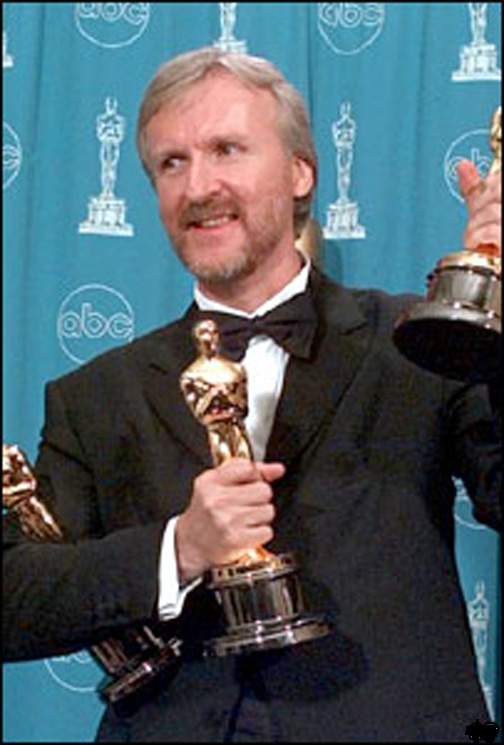
If failure wasn’t an option, then I was essentially a failure. That summer I came across a Ted Talk by James Cameron. Yes, James Cameron of the Avatar and Titanic fame. Yes, James Cameron, who was sung to in one of the greatest moments of Youtube history by Julian Smith. If you have 15 or so minutes, please check it out. It’s amazing. He essentially took most of what I had thought and had learned from in Apollo 13 and threw it in the garbage. James Cameron, one of the most creative film minds in history, said “Failure is an option.”
Now we have all heard the quotes from Edison about failure and Michael Jordan’s quote about failure was on a poster in my bedroom. However, do we really think this way? Do we really believe that failure can lead to success? If you were to look at our culture, I would argue that it is hard to see that being true. If you were to look at our schools and how we set up education, I would argue that absolutely does not foster this mindset.
Now, as I mentioned before, Daniel Pink’s book Drive has been very influential for me recently, however I want to somewhat eliminate the idea of algorithmic learning. Yes, it is important, and yes I do teach it and yes I do assess it. However, this is essentially easy to motivate and even easier to assess. For that reason, I feel that we as an educational entity lean more towards these styles of teaching and learning because they are a little easier to deal with.  On the other side of things, as Pink has detailed, our world is made up of some serious problems that can’t be solved using algorithms, but require creativity and problem solving beyond the set of currently constructed parameters.
I found myself in this crossroads. Not only did I want to show that it is okay to fail and get better, in my own situation, but I felt like it would be important for me to foster the same thing with my students. This is a huge question. How can you foster a level of creativity, where students can become lifelong learners, where they can have the freedom to try things out, in a system that is inherently “Failure is Not an Option” driven?
This year we have started working on 20% time. I have detailed this out in prior posts, however I just want to make sure that I state something in the process that I think cannot be overstated. James Cameron says “Curiosity is the most powerful thing you own. No important innovation was ever done without risk. Failure is an option, but fear is not.”  We have taken this on as somewhat of a motto for my kids and their projects.
   Let me explain. The students are to pick a project that they plan on working on all year long. There are some amazing things that they are all doing. Next week I will be posting some of these ideas. Suffice it to say, these kids are really blowing me away with their ingenuity, resourcefulness, and excitement to be and do something important. That being said, I have one student who has told me that he plans to build an engine, from scratch, that runs on natural gas. This is an amazing endeavor. We have looked on the surface about what this might require financially. Parts alone will cost at least $1500 not to mention the equipment needed to compress things and pressurize different parts of the engine. This is more than I can handle, and I would surmise on the surface that it is probably more than he can handle. My brain wants to tell him to not do this. I refuse to. I refuse to tell him no, because it is what he is passionate about and the work (writing, research, reading) that I anticipate getting out of him is more than I would ever get out of him in a traditional setting. He is already 100 pages into a book about how to do this. I guarantee that is 100 pages more than he has read in the last 2 years. For me, as long as he does that part, it is not a failure.
What I expressed to him is my confidence in his ability to figure things out. What I am preparing him for is the possibility that what he wants to do cannot be done. Rather than presenting to the class that he has failed, this particular student will present to the class the steps he took to realizing that this was more than he could do or handle. There is no failure here, there is merely detailing the steps of the process. I am actually more excited about seeing his presentation than some of the other ones. I am excited to see how far he is able to go.  I am excited to see what he does accomplish. I also look forward to the idea of him maybe trying again next year, or in five years or ten and finally figuring it out.
So here is my plan with my students and how I will assess their projects:
1. Each week they will post a blog post describing what they did in their project, what they are currently doing, and what they will be doing in the future.
2. These blogposts will be 200 words long and include at least one visual. I am allowing one vlog per month, however the script needs to be written before the post.
3. I will read/view each blog on Sunday night. I will comment and give ideas but I will not grade for content. It will be a “if you did it you get credit, if you don’t, then you don’t” type of an assignment.
4. I will be reading to find out if they are still having a good time with project and if they are still motivated to work on it. This will not have a grade value, but merely for my own personal assessment.
5. They will be asked to read and comment on 5 blogs per month. This will be graded on the same criteria.
I will help facilitate their projects by helping them get whatever resources they need to be successful. I will provide reading materials and help them create their own PLN and a Mentor for the process. Twitter will be key in creating this.  Learning from mistakes is paramount, however as we all know, if we can have somebody who can let us know about the road block before hand, it definitely makes the journey a little more smooth.
Below are some of the apps and programs that we will be using to power our 20% projects.
             

In hindsight, I learned a lot from that night at the theater. I learned that girls are generally smarter than guys, and these particular girls probably protected me from getting into trouble with my parents. I learned that NASA was actually pretty cool (I hadn’t thought that before that night). More importantly, however, was that I learned that sometimes even the best laid plans fall apart and that Michael Jordan and Thomas Edison were right. And of course, James Cameron is right when he said in his 2010 Ted Talk in Long Beach, California, “Curiosity – it’s the most powerful thing you own. Imagination is a force that can actually manifest a reality. NASA has this phrase that they like “failure is not an option,” but failure HAS to be an option, in art and in exploration. Because it’s a leap of faith. And no important endeavor that required innovation was done without risk. You have to be willing to take those risks. In whatever you’re doing, failure is an option, but fear is not.”

Tuesday, October 22, 2013

Star Wars, PBL, Goodwill Hunting, and 20% Time in My Classroom


A couple of years back I came to a stark realization that as a teacher, everything (and I mean everything, thank you very much, Kahn Academy) that I teach is taught on the internet and probably in a better way. I would liken this moment of realization probably to the moment when Luke found out that he had kissed his sister. I had felt like I had picked the wrong field. What did I do as a teacher that provided meaning to my students more so than what they could get from the internet?

One of my favorite scenes in modern cinema is the “How About Them Apples Scene” from Goodwill Hunting (Note: the aforementioned link has some mature language).  To paraphrase the scene Matt Damon argues with a Harvard undergrad about the economic structure of the pre-revolutionary war colonies. Matt Damon says in the argument, “You dropped 150 grand on an education that you could have gotten for a dollar fifty in late charges at the public library.” Now this isn’t to say that a college education is unnecessary; far from it. In fact the movie, I believe, argues that false dichotomy completely. I guess the realization I had and this particular scene both hit home for me as a teacher and make me wonder how or even if I can do more for my students than what they can get for $1.50 less than even Matt Damon had mentioned through the internet.

Last year I asked many of my students (Juniors and Seniors in High School) why they came to school. I was not surprising what their answer was. Far and away, the most common answer was friends and the social aspect. The second most common answer was to get into college. This is very encouraging. The third most common answer, however, was that they only came to school because their parents/the state/my probation officer is making me. Now, this wasn’t a controlled scientific poll, but just something I asked in a very informal way. However, it led me down a path of questioning myself. If, according to my generated data, less than 30% of my students were coming to school for an education, then that just wasn’t cutting it. I needed to find a way to motivate the others.

This summer I was lucky enough to have a google hangout with an amazing teacher by the name of Kevin Brookhouser. I could go on for days on how impressive he is and all his titles. He is a certified Google instructor, Certified iPad Instructor, English Teacher at a private school in California; his list goes on and on. He recently did a TED Talk on what is called 20% time. If you have a second, check it out.

One of the most important things I got from him, however was to read a book called Drive by Daniel Pink. What Daniel Pink suggests is that historically our best motivating tools, in business and schools, are carrots and sticks; meaning if you are good then you receive a sweeter carrot, if you are bad you get hit with a bigger stick. Carrots and stick, or extrinsic motivation, is not beneficial to properly motivate people today. At least not in the sense of promoting 21st Century Skills and real world creativity for solving real world problems. If you have about 15 minutes, check out his TED Talk as well, he can describe this better than I can, and he’s a tad bit more entertaining. Suffice it to say, he claims that carrots and sticks hinder creativity, rather than help it.

I was as guilty as any teacher at this. I would ask for creative responses and try to foster it by throwing out candy right and left. I would joke with my students and say that I was throwing tootsie rolls like Tebow throws footballs (This clip is a great one about muscle memory and bad habits–another topic for another day). I gave out treats for the most creative answers, and in return, probably stifled other creative responses. Granted, it was unintentional, but detrimental much the same.

I had remembered back into high school and college and all of my great teachers and lessons learned. Again, I will probably leave out some great teachers. That being said, I had a Visual Narratives course from Dr. Todd Petersen at Southern Utah University. This class was life changing for a million different reasons. But one specific reason was that I remember not caring what my grade was. I did not care how sweet the carrot was that I got at the end, nor did I care if I got hit with a big stick for failing. I enjoyed every second of it. I spent hours working on the class project, I put off other school work for his projects. While coaching JV basketball that year, I was often found working on this project on bus rides and even in the bleachers during our Freshman and Sophomore team’s games. I even specifically remember calling in sick to work once so that I could finish up a post I was doing on the class wiki regarding the Watchmen. Bear in mind, this assignment wasn’t extra credit, nor was it part of a specific grade for the class. To echo what Pink talks about, I actually gave up carrots (a hourly shift at a local pizza store) to be able to work on extra aspects of this class. I was motivated, invested and had no interest in the extrinsic reward yet I was extremely interested in the end outcome.
Pink talks about the three motivating factors for creativity: Autonomy, Mastery, and Purpose. He claims that people need to be in charge of what they are doing or at the very least how they do it. I have noticed this in the classroom. Many times students can’t get involved or engaged because they aren’t interested in the subject. Mastery, involves the aspect that the individual feel incremental improvement. It is not about perfection but seeing themselves get better. Finally, and in my opinion the most important, is purpose. Too many times students will complain by saying “when am I ever going to need to know this.” Giving them an actual real life purpose eliminates that.

Pink details many great companies leading the way in motivating their employees. Among these companies, Google, 3M, Facebook and a company named Atlasian that have given their employees 20% of their time to work on whatever projects they would like. These projects are later presented to the companies. The amazing thing is that after implementing this, the productivity has gone up and they have developed some amazing inventions as a result.
This is what I was looking for. This is what I want for my students. However, the question now becomes how to do this in my classroom. How can I turn my classroom into a place where they can create.
Here is my plan

  • Students will have every Friday to work on a project that is new to them and they are passionate about. Only 20 Time work can be done on Fridays.
  • Students will write a weekly blog post updating the world on how their project is doing.
  • Students will do a small presentation to the class at the end of the first semester to update the class on their work.
  • Students will do a final “TED” style talk at the end of the second semester to the class and any others that wish to attend during school.
  • Some students will be selected by students and staff to present at a “TED” style event after school hours that will be open to the community and streamed live.
  • (My personal favorite) Failure IS an option. As it says on Facebook Headquarters “Done is Better than Perfect”
Next week we will be incorporating Brookhouser’s Bad Idea Factory, an structure that is set up to eliminate aprehension and to help kick-start brainstorming efforts. They will then be asked to present their ideas to the class as well as the world. The class will help them decide if this project has worth or if they should retool it, repackage it, or junk it all together and try something else. Students will choose a mentor to help guide them through their project, but the vast majority of the work will be up to the students. I’m very excited to see the different types of projects students will come up with and all of the amazing things they will accomplish.


If you are interested in doing 20 Time in your class, please check out these resources. They were a huge help to me.

Kevin Brookhouser’s Website: http://www.iteachithink.com/


20 Time in Education - Watch the video and check out the site!


I’ll be tweeting about my adventures in 20 Time and you can follow them on the hash tag #20Time or the hash tag #geniushour or my specific tweeting #mre20time. Thanks for stopping by and please share any experience you have had with 20 Time in the comments below.