Showing posts with label Genius Hour. Show all posts

Monday, July 20, 2015

Summer Fun and Fall...Boredom? - One Education Reform Topic

To monitor a teacher's Twitter feed during the summer months is to see a steady supply of posts and pictures showcasing himself or herself at locations far and wide participating in conferences, edcamps, and trainings of all shapes and sizes. They are learning new concepts, partaking in motivational keynotes, and collaborating with peers from across town and across the globe.

In short, they are having a ball doing what they love.

What's more, many of these teachers also spend hours with their kids throughout the pivotal mid-year months in what has become a popular way to help close learning gaps and/or provide much-needed exposure to academic content:
http://www1.pgcps.org/uploadedImages/Offices/Communications/Press_Releases/2013_-_2014/July/Summer-Programs-Banner2.jpg
Photo: Albuquerque Public Schools
From what I can gather, many of these "summer school" opportunities hold very little resemblance to traditional "school" environments. Since many of the kids involved are what we call "at-risk" students, most of the programs operate under a different vision compared to their September-June counterparts.

Traditional schools spend the fall-spring months talking about engagement and innovation and catering to students' wants and needs; however few of them ever deliver the kind of opportunities that summer programs do.

This begs the question...If the structure of summer programs is engaging and effective, why does school not look that way year round? What is the disconnect?

(Before I get too far, let me address the notion that summer programs close all gaps and level the playing field for all students. Simply put, it is not necessarily true. Researchers have found no definitive correlation between summer learning programs and increased student achievement. As is the case with most learning, it seems, student motivation and high quality instruction are the bedrocks of academic achievement. In other words, good teaching is good teaching and kids who want to learn will do just that.)

This blog post is written to neither support nor condemn summer programs as they affect kids' learning. Rather I am writing it as a way to shed light on a summer philosophy, let's say, that seems to imply that summer learning is fun and innovative, while fall-spring learning is meant to maintain its more traditional structures.

Stop me if you've overheard this at a summer school planning session:
"These kids did not get it the first time, so it's pointless to teach it the same way twice. Let's try reaching them another way."
Therefore summer programs all the way from preschool to fifth-year seniors treat their students to field trips, hands-on projects, live performances, and exposure to resources and software normally unavailable during the normal school year. With grants and funding from federal, state, and local government - as well as generosity from regional and local businesses and corporations - participating students experience a rather posh academic lifestyle for a few weeks out of the summer.

However, when September rolls around again, these same "at-risk and struggling" students are back to sitting in rows being subjected to mind-numbing lectures and grappling with tedious and often pointless worksheets.

To steal a phrase from the classic movie Grease:
Oh, oh those summer school days! (fanpop.com)
"Summer Schoolin'
Had me a blast.
Summer Schoolin'
Happened so fast."
My plea is meant to be added to the chorus of others wishing for a particular aspect of education reform. That is, if innovative and fresh ideas are what the doctor orders for summer school participants, why are similar structures too often met with resistance from teachers and administrators alike?

The means of perpetuating the idea of "cutting-edge" and "Student-Driven" instruction is found amongst the current supply of education buzz words:

Student Voice and Choice
Project-Based Learning
Inquiry Learning
Hands-On Activities
Real World Problems
Creation and Production
Etc

My contention is less about the implementation of these or any other kind of program or learning framework. Rather it is more about the answers to these (and many other) questions:
  • If Maker Spaces, for example, are great for kids in summer programs (or after-school environments) why are more districts not taking steps to incorporate them into weekly school schedules?
  • Robotics programs (and others like them) are valuable for teaching math and science, along with any number of success skills, but why are they not found as regular options for kids during the school year?
  • Summer School students often get to go on relevant field trips as a major portion of their summer learning, but why from September to June does it become problematic to send kids out into locations both local and regional?
  • Cross-curricular units are all the rage in summer programs, but once September hits, why do teachers revert back to closed-door, I'm-the-expert proceedings?
  • Genius Hour or 20 Time give students free, yet scaffolded time to explore their own interests and passions, but where do those hours (well more than 20%, most will say) go during the school year?
While the answers to these questions will continue to evade some educators, there are select groups across the academic landscape that have found success - at least to some degree - in making them work within whatever confines they operate under. If the issue is time and schedule, there are plenty of institutions that have adjusted and tweaked to make things work. If funding is the hangup, there are plenty of examples of places doing more with less. There is no excuse for writing it off as unfeasible.

Interested parties must continue to keep the conversations alive with administrative personnel, community members, parents, peer teachers, and - most importantly - the kids.

Wednesday, July 8, 2015

A Story of Assessment and Evidence: NBA Edition

Stop me if you've heard this one:

Two teachers walk into a school, and the principal asks them where their student data is.

___________________________________________________________________

Let's face it. As educators we live in an assessment-heavy, data-driven world governed by the results-indicator division of academic law enforcement (legislation). There is no way to escape without measuring our students with some form of data or another. However, while I understand the necessities of curating and monitoring students numerically, there are more ways to gather meaningful evidence than simply giving our kids "common" assessments and sharing spreadsheets with one another at staff meetings.

Let me put it to you this way, in the language of the National Basketball Association:

In 1984, the Chicago Bulls drafted Michael Jordan, who went on to become arguably the greatest player in the history of professional basketball. Jordan's 6 World Championships, 5 league MVP awards, 6 NBA Finals MVP awards, 3 All-Star Game MVP trophies, and 2 Olympic gold medals make him every bit the part of a high school valedictorian. In comparing His Airness to a student, Jordan's "academic" record would make him the model pupil who aced every test given him and graduated with high honors.

Now compare Jordan to two other former NBA players also selected in the 1984 NBA Draft - one named Sam Bowie and the other Landcaster Gordon. Bowie, a 7-1 skyscraper, had a stellar basketball career at the University of Kentucky, while Gordon, a 6-3 guard, starred at Louisville. However, neither of them has the same NBA portfolio as does Michael Jordan (see below). Given that their college "evidence" was relatively similar (see below) we would assume, given educational analysis, that all three would be relatively successful in the professional ranks.

College Stats - Source: Basketball-Reference.com
NBA Stats - Source: Basketball-Reference.com
Here is the kicker. Bowie was chosen second overall by the Portland Trailblazers, and Gordon went to the Los Angeles Clippers as the eighth overall selection. Jordan - the best player the world has ever seen - was picked third. Bowie has become the punchline of several Jordan jokes while no one really has ever heard of Landcaster Gordon. (And no, it is not this guy to the right.)

The data, in this case, did not tell the entire story.

Granted, selecting players in the NBA draft is no easy science, anymore than that of predicting the academic achievement of students - or what they might accomplish as the venture into the world of employment.

Gordon, #4, never fulfilled
his NBA potential
In the case of Michael Jordan, he was pegged (based largely on data) as a future superstar and lived up to the hype. Bowie, who had impressive numbers as well, was a marginal pro with a lackluster career. Gordon? Well, he was the kid with data-proven "potential" who never quite measured up.

Despite all of the assessment data we gather on our kids, there are obviously several untold stories that combine to make each and every student who they are - individually.

I argue that data - be it from common assessments, standardized testing, or any number of other formats - only tells a part of the story. If college success unilaterally foretold professional achievement, then life would be so much easier for the highly-paid executives, coaches, and players in the NBA. However, like education, success on one assessment (college play) does not mean "proficiency" on another (professional performance).

To help all students complete their own stories, educators need to provide opportunities for them to give performances in the realm of any given content or concept, but on stages of their choosing. Michael Jordan was an amazing basketball player and proved as much against the best the work had to offer. Bowie was also a stellar player, up until he faced the cream of the crop. NBA stardom was just not in his cards. (To be fair, Bowie suffered from foot injuries that were beyond his control and those kept him from reaching his true potential; ultimately, he was never anything more than a serviceable player.)

The point is, each and every college player with aspirations of playing in the NBA is given ample opportunities to show his talents against some of the best prospects in the world. The NBA has a summer league devoted to giving young, unestablished players chances to impress coaches and front office personnel. There is also a developmental league (the NBDL) for not-yet-ready players that serves as the minor league system for major franchises.

Manute Bol was 7-6!
Do we do the same for our kids? If they struggle in one aspect of learning do we write them off as Landcaster Gordons who will never cut it in "real world" environments? Are they cast off from consideration because they do not show the proper "academic" prowess that we'd like to see? Honestly, if Sam Bowie was only 6-7 instead of 7-1, would anyone have paid him any attention? And thus do we intentionally leave kids off "the team" because of what they don't possess?

Give Michael Jordan a basketball and he would absolutely amaze us with his abilities on the court. Put a skateboard under the feet of Tony Hawk and he'd leave us in awe. Place Missy Franklin in a pool and she'd leave us shaking our head in disbelief. Hand a mic to Aretha Franklin and be prepared for an all-out show. Conversely, if we gave them all a standardized test, would we be equally as satisfied?

Aside from the obvious and mandated assessment that permeates our academic landscape, look to find other ways for kids to truly show what they know. Here are just a few tips:

  • Student-made videos: These creations can let student personality and ability shine through. Upload to YouTube or share with social media.
  • Video game creations: Programs like Minecraft have become viable avenues to let students create and explore ideas. Another example of letting them use the tools they already have.
  • Cartoons and animation: From the advanced (Scratch) to the intermediate (PowToon) to the basic (Google Slides), students can tell a story in so many different ways. Let them do it in their own way.
  • 3D modeling: Tinkercad is just one way kids can create any 3D image imaginable. It's great for learning math and science especially, but works with any content. Integrates with 3D printers perfectly.
  • Interactive whiteboards: Apps like Explain Everything allow kids to talk their way through concepts and knowledge without the nervousness of speaking in front of the class.
  • Music, poetry, and other forms of art: These modes of expression are so much of our students' world right now. Let our kids be artistic and creative and fresh. Even the most timid personalities will bloom.
  • App creation: There are several free programs that provide app creation services - everything from basic features to advanced functions.
  • Ask the students: It might surprise us adults to know that our kids do possess actual talents and abilities that do not fit into the traditional mold of academia. Let that archaic philosophy go. After all, we are preparing them for THEIR world, not OURS. Sure, we know how to excel in today's world, but don't we go about our lives differently than our parents and grandparents did?
  • Genius Hour: Set aside a few hours a month for kids to explore and do what they want. The results from GHs are astounding.
  • It is no excuse that WE don't know all about these options. What's more, it is unacceptable if our students do not know about them. We are doing our kids a disservice - academic malpractice even - if we do not expose them to these options and let them explore and create.
Think about this:

What will be the basketball...the skateboard...the microphone...the computer program...that turns your kids into Michael, Tony, Aretha, or Mark.

What will they do to complete their story?

Will we let them?

Follow us on Twitter for more EdTech integration tips and ideas. Also follow Maniac Darin Anderson.

Saturday, October 26, 2013

Sharknado, Bad Idea Factory, Olympic Curling and 20% Time in the Classroom


A few months back, July 11th, to be specific, I had just arrived home from a day of Project Based Learning training. Mostly because of a summer full of basketball camps, involuntary vacations, and teacher trainings, I hadn't had much of a break. I sat down on my bed, locked my door to the outside world and just wanted to "veg-out." As an avid sports fan, it was also a horrible time to be looking for sports, as it was a night of regular season baseball or probably some international curling championship. Naturally, my remote landed on the SyFy channel. It was the premiere of Sharknado.


I recently, in class, likened the beauty found in Gothic literature to my personal imitation of the Fresh Prince of Bel-Air doing the running man, and the decaying buildings in Detroit (These are all beautiful in their descent into destruction). I would also throw Sharknado into that category. Sharknado, for those who haven't heard of it (and if you haven't, then I would suggest selling the rock you've been living under and upgrading your humble abode) is a made for television B-grade disaster movie about a waterspout, or hurricane of sorts, that lifts sharks out of the ocean and deposits them in downtown Los Angeles. Starring the ever impressive Tara Reid, and my favorite 90210 star Ian Zeiring, this movie captured America as, according to NBC Universal, the show averaged 5,000 tweets per minute throughout the show. Now, it is important to understand that most of these tweets ranged from:
 to 
However, amidst all of these responses, There were a few others that looked like this:
 and

Throughout a personal viewing of this movie, I found myself jumping between the two thoughts of "How in the world is someone making money with this movie?" to "How ingenious is it that someone is making money with this movie?" There obviously can be a literary theoretical/philosophical debate about how culturally the binaries are flipping into a world where "bad is good" and masculinity now equals this; however that is not where I am going.

My point is, that often times out of obvious bad ideas, can come some pretty amazing things.

Again, I have detailed that my classes are working on their 20% time projects. I ran into a few problems. Despite my hope that all of my students knew exactly what they would do if given their freedom, as it turns out, this isn't entirely true. With that being said, I needed some ideas to help them come up with ideas.

I came across the Sharknado of brainstorming tactics. Using an idea I stole from Kevin Brookhouser which he stole from Karl Lindgren-Streicher, I decided to implement the Bad Idea Factory. What this is, in a nutshell, my students took the vast majority of en entire 50 minute class period, where they came up with the worst ideas possible for their projects. Bear in mind, I am teaching at a public high school and working with Juniors and Seniors. There were some bad ideas, and there were some "Bad" ideas. There were literally thousands of bad ideas. Here are some of the things they came up with:
  • A Zombie Board Game
  • Make a Lion your pet
  • Have a school wide mud fight
  • Ride a Hippo
  • Wear 2 left shoes for a week
  • Direct traffic on the freeway
  • Write a love song to a refrigerator
  • Play video games for 72 straight hours
  • Purpose marriage to a stranger on the street
  • Wear a dog collar and say it's your master's.
  • Play Marco Polo at Sea World
  • Talk only in acronyms
  • Make a motorized tricycle
  • Fill a pool with blue coconut juice
  • Learn to become a Sumo Wrestler
  • Eat a television
This is just a sample of what was described. The crazy thing about this activity is that within the bad ideas, came some pretty amazing things.

One group saw the idea of making a Zombie Board Game, and has decided to run with that. They are now learning the process of making board games and have now set up a time to meet with a game developer to find out how to pitch their ideas. I will post a link to their blog as things begin to develop.

Another student was dead set on writing a love song to a refrigerator.  After presenting this in the bad idea factory, his peers laughed. When he presented it to the class as his actual idea, they voted him down. When he presented it a second time with a deeper description, most everyone, myself included thought exactly what Greg Berlanti said about Sharknado: "Why didn't I think of that?"

This student presented to the class that he had always struggled with his weight. He felt the root of his struggles came from self esteem issues and feeling comfort in what was found in the fridge. To combat this he was planning on learning to play the guitar to improve his self confidence. In return he would like to write a satirical love song in which he eventually breaks up with his refrigerator. He plans to post this song, when completed, on youtube and I have no doubt in my mind that this video will soon go viral. The process that this student is going through, as he documents it, is impressive and what he is learning about (song structure, poetry, research on how to play a guitar and even writing letters to one of his guitar idols) is more work than I would have ever imagined seeing out of this great kid.

Now, this is how it worked:

At the beginning of class, I strategically divided my class up into groups. I use playing cards to do this as they walk in. This allows me to divide up based on numbers, colors, suits and a whole slew of different ways; this renders students trying to trade the cards to get their friends in their groups ineffective. As they got in their groups, I set up a competition, to come up with the most ideas, whether bad or good, as possible. No idea could be rejected. I joked with them and said that there was "no such thing as a dumb idea, only a dumb person." They laughed, but got the idea. I gave them a large sticky sheet and a few markers. i gave them a 30 minute timer and wandered around. At the 30 minute break, I had my students take their ipads and do a gallery walk. They had 10 minutes to go around, enjoy the crazy ideas, and then record on evernote 5 ideas that could be turned into good 20 time projects.

I gave them 3 thinking questions:
1. Could this idea be completely flipped and made into something positive?
2. With the right audience, could this be a good idea?
3. Could this idea in some way benefit another person?

To say this was my most enjoyable teaching experience of the year would be a bit of an understatement. My kids had fun, came up with some great (and not so great) ideas and were able to get a better grasp on what they could do for their projects.


I am really happy that we live in a world of Sharknados, and now its sequel Sharknado 2: The Second One, which will be coming out in July this upcoming year. I understand that this may not be an apt comparison, but I recall the reception of J.M. Barrie's presentation of the beloved Peter Pan. People thought he was crazy to be writing a play about kids who flew to a far away land with fairies, pirates, Indian braves and a hero who never grew up. Likewise, many turned down J.K. Rowling's initial idea of a boarding school for teenage witches and wizards. Without a few initial bad ideas, we may not ever get to something substantive.


Friday, October 25, 2013

Failure: 20% Time, James Cameron, Nasa, and my first PG-13 movie by myself.

It was 1995, I was 13 years old, which meant one thing: PG-13 movies by myself. Having just moved to a fairly conservative Utah community, this right of passage could not be overstated. I had seen my fair share of PG-13 movies, but never by myself. I had planned this out down to the minute. On my birthday, which happened to fall in the summer, would include a small family gathering with cake and Mr. Pibb, following which my friends and I were going to go to a movie. This was what I told my parents. What I didn’t tell them was that we were meeting up with some girls, something completely forbidden by our parents. This was a pretty risky move on my part and required careful planning. We were to be dropped off by our parents at the theater at 6:30 for the 6:50 film. The girls were to be dropped off 10 minutes later to avoid overlap. The movie was Apollo 13, it was either that or Batman Forever. As a huge Batman fan, there are two things that fell incredibly short in my book, the recent announcement of Ben Affleck as the Caped Crusader and the entire Batman Forever Film (I refuse to acknowledge that Batman and Robin even exists, just as I refuse to acknowledge Rocky V). It was the right choice, and the plan was perfect.
We arrived at the exact time as planned. We went in, got popcorn, saved seats (boy/girl/boy/girl of course) and waited. 6:40 came and the girls didn’t. 6:50 and still nothing. Seeing as it was before cell phones, we played Paper/Rock/Sicissors (The correct form as it is in alphabetical order) to see who would go call and see if they had gotten lost. My lifelong buddy Zach, lost and headed out to the phone booth. He returned a few minutes later, midway through a trailer for Waterworld, shaking his head. The girls had chickened out. The fact that this could be a foreshadowing for my dating life is another topic for another post. However I remember sitting there being very disappointed, watching one of the greatest movies of the year. Each moment seemed to detail my early teenage angst.

At one point, as Ed Harris, playing Gene Kranz, is in a brainstorming room with other NASA members. They are trying to bring Tom Hanks, Bill Paxton and Kevin Bacon home. As they come up with a temporary plan, Kranz says “We have never lost an American in space and we sure aren’t going to lose one on my watch. FALURE IS NOT AN OPTION.”  I remember thinking at the time about how we had everything planned out perfectly with those girls, and if I had just planned it out better, I could have said to my buddies, the same exact thing.
This became a big phrase for me. I could have tattooed “Failure is Not an Option” on my forehead and it wouldn’t have been less on my mind than it was. I used it as I played sports in high school. I used it  as I dated my soon to be wife (thank goodness for that) and used it as I was in college and entered into the job field as a teacher. I even, to a certain degree, used it with the kids I taught and coached.
The problem came my first year of teaching.
I had some great experiences my first year. I met some fantastic kids, taught some fantastic lessons, and felt like I had made an impact albeit small, on the lives of most of my students. As I reflected on the year, however, I realized that there were a few parts of my curriculum that I wasn’t particularly strong at and it reflected on my students end of the year tests. Though most of my students did fairly well, and all passed, I felt like I had failed them at least a little bit.
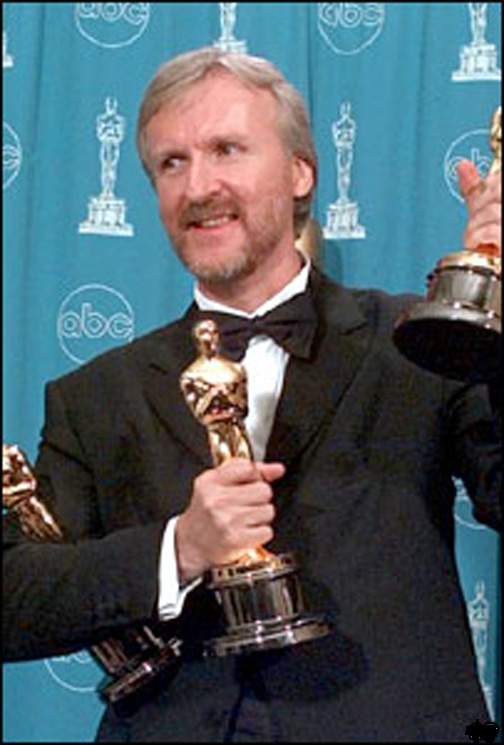
If failure wasn’t an option, then I was essentially a failure. That summer I came across a Ted Talk by James Cameron. Yes, James Cameron of the Avatar and Titanic fame. Yes, James Cameron, who was sung to in one of the greatest moments of Youtube history by Julian Smith. If you have 15 or so minutes, please check it out. It’s amazing. He essentially took most of what I had thought and had learned from in Apollo 13 and threw it in the garbage. James Cameron, one of the most creative film minds in history, said “Failure is an option.”
Now we have all heard the quotes from Edison about failure and Michael Jordan’s quote about failure was on a poster in my bedroom. However, do we really think this way? Do we really believe that failure can lead to success? If you were to look at our culture, I would argue that it is hard to see that being true. If you were to look at our schools and how we set up education, I would argue that absolutely does not foster this mindset.
Now, as I mentioned before, Daniel Pink’s book Drive has been very influential for me recently, however I want to somewhat eliminate the idea of algorithmic learning. Yes, it is important, and yes I do teach it and yes I do assess it. However, this is essentially easy to motivate and even easier to assess. For that reason, I feel that we as an educational entity lean more towards these styles of teaching and learning because they are a little easier to deal with.  On the other side of things, as Pink has detailed, our world is made up of some serious problems that can’t be solved using algorithms, but require creativity and problem solving beyond the set of currently constructed parameters.
I found myself in this crossroads. Not only did I want to show that it is okay to fail and get better, in my own situation, but I felt like it would be important for me to foster the same thing with my students. This is a huge question. How can you foster a level of creativity, where students can become lifelong learners, where they can have the freedom to try things out, in a system that is inherently “Failure is Not an Option” driven?
This year we have started working on 20% time. I have detailed this out in prior posts, however I just want to make sure that I state something in the process that I think cannot be overstated. James Cameron says “Curiosity is the most powerful thing you own. No important innovation was ever done without risk. Failure is an option, but fear is not.”  We have taken this on as somewhat of a motto for my kids and their projects.
   Let me explain. The students are to pick a project that they plan on working on all year long. There are some amazing things that they are all doing. Next week I will be posting some of these ideas. Suffice it to say, these kids are really blowing me away with their ingenuity, resourcefulness, and excitement to be and do something important. That being said, I have one student who has told me that he plans to build an engine, from scratch, that runs on natural gas. This is an amazing endeavor. We have looked on the surface about what this might require financially. Parts alone will cost at least $1500 not to mention the equipment needed to compress things and pressurize different parts of the engine. This is more than I can handle, and I would surmise on the surface that it is probably more than he can handle. My brain wants to tell him to not do this. I refuse to. I refuse to tell him no, because it is what he is passionate about and the work (writing, research, reading) that I anticipate getting out of him is more than I would ever get out of him in a traditional setting. He is already 100 pages into a book about how to do this. I guarantee that is 100 pages more than he has read in the last 2 years. For me, as long as he does that part, it is not a failure.
What I expressed to him is my confidence in his ability to figure things out. What I am preparing him for is the possibility that what he wants to do cannot be done. Rather than presenting to the class that he has failed, this particular student will present to the class the steps he took to realizing that this was more than he could do or handle. There is no failure here, there is merely detailing the steps of the process. I am actually more excited about seeing his presentation than some of the other ones. I am excited to see how far he is able to go.  I am excited to see what he does accomplish. I also look forward to the idea of him maybe trying again next year, or in five years or ten and finally figuring it out.
So here is my plan with my students and how I will assess their projects:
1. Each week they will post a blog post describing what they did in their project, what they are currently doing, and what they will be doing in the future.
2. These blogposts will be 200 words long and include at least one visual. I am allowing one vlog per month, however the script needs to be written before the post.
3. I will read/view each blog on Sunday night. I will comment and give ideas but I will not grade for content. It will be a “if you did it you get credit, if you don’t, then you don’t” type of an assignment.
4. I will be reading to find out if they are still having a good time with project and if they are still motivated to work on it. This will not have a grade value, but merely for my own personal assessment.
5. They will be asked to read and comment on 5 blogs per month. This will be graded on the same criteria.
I will help facilitate their projects by helping them get whatever resources they need to be successful. I will provide reading materials and help them create their own PLN and a Mentor for the process. Twitter will be key in creating this.  Learning from mistakes is paramount, however as we all know, if we can have somebody who can let us know about the road block before hand, it definitely makes the journey a little more smooth.
Below are some of the apps and programs that we will be using to power our 20% projects.
             

In hindsight, I learned a lot from that night at the theater. I learned that girls are generally smarter than guys, and these particular girls probably protected me from getting into trouble with my parents. I learned that NASA was actually pretty cool (I hadn’t thought that before that night). More importantly, however, was that I learned that sometimes even the best laid plans fall apart and that Michael Jordan and Thomas Edison were right. And of course, James Cameron is right when he said in his 2010 Ted Talk in Long Beach, California, “Curiosity – it’s the most powerful thing you own. Imagination is a force that can actually manifest a reality. NASA has this phrase that they like “failure is not an option,” but failure HAS to be an option, in art and in exploration. Because it’s a leap of faith. And no important endeavor that required innovation was done without risk. You have to be willing to take those risks. In whatever you’re doing, failure is an option, but fear is not.”

Tuesday, October 22, 2013

Star Wars, PBL, Goodwill Hunting, and 20% Time in My Classroom


A couple of years back I came to a stark realization that as a teacher, everything (and I mean everything, thank you very much, Kahn Academy) that I teach is taught on the internet and probably in a better way. I would liken this moment of realization probably to the moment when Luke found out that he had kissed his sister. I had felt like I had picked the wrong field. What did I do as a teacher that provided meaning to my students more so than what they could get from the internet?

One of my favorite scenes in modern cinema is the “How About Them Apples Scene” from Goodwill Hunting (Note: the aforementioned link has some mature language).  To paraphrase the scene Matt Damon argues with a Harvard undergrad about the economic structure of the pre-revolutionary war colonies. Matt Damon says in the argument, “You dropped 150 grand on an education that you could have gotten for a dollar fifty in late charges at the public library.” Now this isn’t to say that a college education is unnecessary; far from it. In fact the movie, I believe, argues that false dichotomy completely. I guess the realization I had and this particular scene both hit home for me as a teacher and make me wonder how or even if I can do more for my students than what they can get for $1.50 less than even Matt Damon had mentioned through the internet.

Last year I asked many of my students (Juniors and Seniors in High School) why they came to school. I was not surprising what their answer was. Far and away, the most common answer was friends and the social aspect. The second most common answer was to get into college. This is very encouraging. The third most common answer, however, was that they only came to school because their parents/the state/my probation officer is making me. Now, this wasn’t a controlled scientific poll, but just something I asked in a very informal way. However, it led me down a path of questioning myself. If, according to my generated data, less than 30% of my students were coming to school for an education, then that just wasn’t cutting it. I needed to find a way to motivate the others.

This summer I was lucky enough to have a google hangout with an amazing teacher by the name of Kevin Brookhouser. I could go on for days on how impressive he is and all his titles. He is a certified Google instructor, Certified iPad Instructor, English Teacher at a private school in California; his list goes on and on. He recently did a TED Talk on what is called 20% time. If you have a second, check it out.

One of the most important things I got from him, however was to read a book called Drive by Daniel Pink. What Daniel Pink suggests is that historically our best motivating tools, in business and schools, are carrots and sticks; meaning if you are good then you receive a sweeter carrot, if you are bad you get hit with a bigger stick. Carrots and stick, or extrinsic motivation, is not beneficial to properly motivate people today. At least not in the sense of promoting 21st Century Skills and real world creativity for solving real world problems. If you have about 15 minutes, check out his TED Talk as well, he can describe this better than I can, and he’s a tad bit more entertaining. Suffice it to say, he claims that carrots and sticks hinder creativity, rather than help it.

I was as guilty as any teacher at this. I would ask for creative responses and try to foster it by throwing out candy right and left. I would joke with my students and say that I was throwing tootsie rolls like Tebow throws footballs (This clip is a great one about muscle memory and bad habits–another topic for another day). I gave out treats for the most creative answers, and in return, probably stifled other creative responses. Granted, it was unintentional, but detrimental much the same.

I had remembered back into high school and college and all of my great teachers and lessons learned. Again, I will probably leave out some great teachers. That being said, I had a Visual Narratives course from Dr. Todd Petersen at Southern Utah University. This class was life changing for a million different reasons. But one specific reason was that I remember not caring what my grade was. I did not care how sweet the carrot was that I got at the end, nor did I care if I got hit with a big stick for failing. I enjoyed every second of it. I spent hours working on the class project, I put off other school work for his projects. While coaching JV basketball that year, I was often found working on this project on bus rides and even in the bleachers during our Freshman and Sophomore team’s games. I even specifically remember calling in sick to work once so that I could finish up a post I was doing on the class wiki regarding the Watchmen. Bear in mind, this assignment wasn’t extra credit, nor was it part of a specific grade for the class. To echo what Pink talks about, I actually gave up carrots (a hourly shift at a local pizza store) to be able to work on extra aspects of this class. I was motivated, invested and had no interest in the extrinsic reward yet I was extremely interested in the end outcome.
Pink talks about the three motivating factors for creativity: Autonomy, Mastery, and Purpose. He claims that people need to be in charge of what they are doing or at the very least how they do it. I have noticed this in the classroom. Many times students can’t get involved or engaged because they aren’t interested in the subject. Mastery, involves the aspect that the individual feel incremental improvement. It is not about perfection but seeing themselves get better. Finally, and in my opinion the most important, is purpose. Too many times students will complain by saying “when am I ever going to need to know this.” Giving them an actual real life purpose eliminates that.

Pink details many great companies leading the way in motivating their employees. Among these companies, Google, 3M, Facebook and a company named Atlasian that have given their employees 20% of their time to work on whatever projects they would like. These projects are later presented to the companies. The amazing thing is that after implementing this, the productivity has gone up and they have developed some amazing inventions as a result.
This is what I was looking for. This is what I want for my students. However, the question now becomes how to do this in my classroom. How can I turn my classroom into a place where they can create.
Here is my plan

  • Students will have every Friday to work on a project that is new to them and they are passionate about. Only 20 Time work can be done on Fridays.
  • Students will write a weekly blog post updating the world on how their project is doing.
  • Students will do a small presentation to the class at the end of the first semester to update the class on their work.
  • Students will do a final “TED” style talk at the end of the second semester to the class and any others that wish to attend during school.
  • Some students will be selected by students and staff to present at a “TED” style event after school hours that will be open to the community and streamed live.
  • (My personal favorite) Failure IS an option. As it says on Facebook Headquarters “Done is Better than Perfect”
Next week we will be incorporating Brookhouser’s Bad Idea Factory, an structure that is set up to eliminate aprehension and to help kick-start brainstorming efforts. They will then be asked to present their ideas to the class as well as the world. The class will help them decide if this project has worth or if they should retool it, repackage it, or junk it all together and try something else. Students will choose a mentor to help guide them through their project, but the vast majority of the work will be up to the students. I’m very excited to see the different types of projects students will come up with and all of the amazing things they will accomplish.


If you are interested in doing 20 Time in your class, please check out these resources. They were a huge help to me.

Kevin Brookhouser’s Website: http://www.iteachithink.com/


20 Time in Education - Watch the video and check out the site!


I’ll be tweeting about my adventures in 20 Time and you can follow them on the hash tag #20Time or the hash tag #geniushour or my specific tweeting #mre20time. Thanks for stopping by and please share any experience you have had with 20 Time in the comments below.