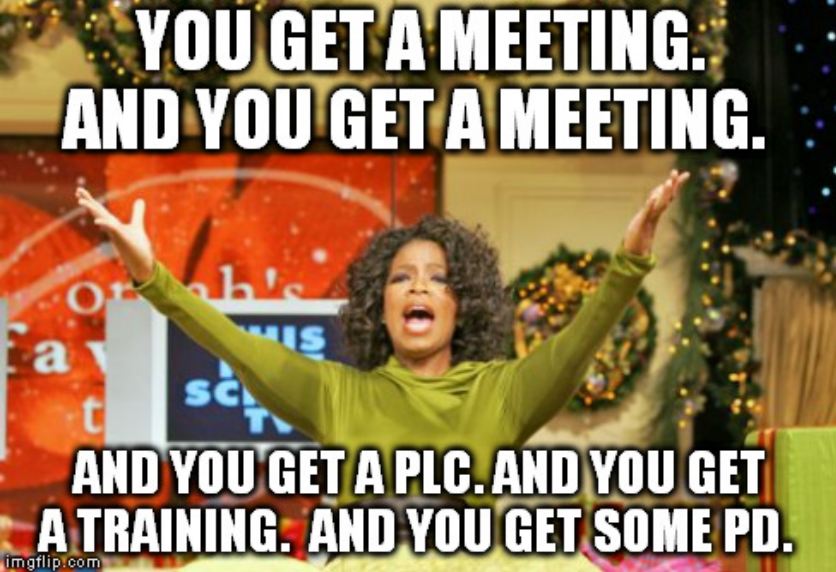
A: They all illustrate the lighter side of education
B. They all use education to entertain us
C: They all remind us of our school experiences
D: They all portray a negative image about schools
(Answer at the bottom of this post)
When I was growing up, I had the notable schedule, as did many of us, of watching Saved by the Bell every Saturday morning and then catching The Simpsons on Sunday night. Throw in the Fresh Prince during the week, and I was hooked up with all the teenage humor and drama that I needed.
Without a fully developed frontal lobe, of course I could laugh at the hijinks and timely zingers delivered in each of the episodes and not even bat a questioning eye. I especially chuckled at the good-natured jabs at public and private education. I mean, who doesn't love a joke at the principal's expense? It was funny television, and that was okay with me.
Now that I am older and wiser (the ol' prefrontal cortex is just about there, folks!) I can see the errors of my ways. Sure, there is still plenty of humor to be found in shows like this, but with my ability to "know better," I can see the shows I used to love for what they were.
Think of what we learned about education from each of these sitcoms:
Principals and teachers are fools and should be made fun of whenever possible
Breaking rules was not only okay, it made one legendary (See: Bart Simpson & Will Smith's School Jacket)
No teaching ever went on; it was all dating, drama, and detention
Making fun of teachers and classmates was also an easy way to achieve legendary status (see: Screech, for the end result of that.)
Bright and hardworking students (Lisa Simpson) were made the brunt of jokes - because who needs smart people, right?
As for nerds, well, it was always open season on them. Right, Carlton?
Above all, school was a place to goof off, while actual learning was unheard of
The ultimate result, perhaps, was a generation of students who hated going to school because it did not fulfill their Saved by the Bell fantasies. Now these same folks are sending their own children to school decades later. (Yes, it HAS been that long.)
Many parents have a poor taste in their mouths when it comes to their own kids' education in large part due to the many many changes that have taken place in schools over the past couple of decades. Increased Federal Bureaucracy, No Child Left Behind, Common Core State Standards, Performance Based Pay, Instructional Technology, and Flavor-of-the-Month Professional Development, to name just a few.
Add in occasional physical or sexual assault charges, unfair educational practices, rants on social media, or a major television series, and you have all kinds of negative PR about the otherwise wonderful schools across the world.
All of the noise has caused a small but growing firestorm about American education that seems to portray a system that is broken and with no redeemable qualities. To hear some tell it, the teachers of today are lazy and don't care about their students. They are less apt to teach, and more likely to complain on Facebook about their lousy, worthless students and how underpaid they are. They deliver subpar instruction while planning the next teacher's union protest...or lunchtime potluck.
To be clear, there are many instances of schools, administrators, and teachers being up to no good. As educators we know going in that there is a different expectation on us than on other professionals. Don't believe me? When was the last time you visited with your dentist about bicuspids and the quality of dental floss while chatting in Aisle 5 of the Piggly Wiggly?
If we cannot do much to overcome the national trashtalk about education, how do we go about controlling the message that goes out about OUR OWN schools and OUR OWN kids?
Most schools invite parents and community members to take an active role in their schools, from volunteering in classrooms to viewing performances and presentations. Further, school districts and individual schools have a solid social media presence. With Facebook messages or the occasional Tweets, we can keep stakeholders up on the latest announcements and happenings in our schools.
But how many times do schools combine the concepts of visitors and broadcasting outside the building? Check this out.
Up, Periscope.
Periscope is a relatively new app that lets users broadcast a live video feed from almost any smartphone or tablet, and it happens immediately. Since it is linked to Twitter, Periscope will automatically post a link to your live feed to make it accessible to anyone who follows your account. In an instant - just give your broadcast a name and tap the start button - you are live to the entire world. One the broadcast is ended, the entire video is automatically saved to your Periscope account. And it is all for free!
Classroom lectures and presentations can be viewed at home by students who are ill or just as a refresher from kids who were in attendance.
Parents who are unable to attend their child's class presentation can still join in on the fun.
A proactive principal or teacher can broadcast school activities or innovative class projects as they happen.
Students can Periscope each other completing components of a project. (think: PBL)
Back to school night, or math night, can go worldwide as a principal scans her building in search of positive comments from staff, parents, and students.
Extracurricular activities can unite a community when put on Periscope.
Opening a new or building or wishing to show off major renovations? Periscope it!
Field trips remain more than just a memory when they are broadcast to the world. During and afterwards, students and parents can watch the feed and relive the experience.
Seamless integration with Twitter, expands an already powerful educational tool.
These and many other uses combine to make Periscope a viable resource to control your school's message. Sure, core groups of parents know the goods and the bads of your school district, but with Periscope, you can stay on top of the best parts of what you do for your kids.
Many of Gary Larson's comic strips from The Far Side tell so much of a story without so much as a word of dialogue. With his brilliance - no matter how off-the-wall it might be - Larson can indeed draw a picture that is worth well more than a thousand words.
In Part III of the EdTechManiacs comical Gary Larson series (see Parts I and II here), we will discuss how the "delicious" dish of liver and onions relates to the kinds of products we deliver to our students in the classroom and to teachers in schools across the country.
Compare this comic to a classroom
setting from your past. What did you learn?
This Larson offering is both playing off of the innocence of youth and preying upon the insecurities of all of us. Remember, ages ago, when you would clamber outside at the very sound of the ice cream truck rolling down your street? Do you also recall the opposite emotions upon finding out that your mom was making your least favorite meal that night? (Mine was goopy and neon green split pea soup.) This cartoon sums up both the elation of summertime treats and the gloom of unappetizing fare.
Honestly, most of us are fairly competent at sniffing out each kind of opportunity. As the old adage goes, if it looks like liver and smells like liver, it's probably liver, no matter what lengths a person goes to in order to make it seem otherwise. Our students, on one hand, are especially keen at this - and the younger they are the better they are at it.
Kindergartners enter their first year of "official school" having gone through six years of questioning and inquiry and curiosity. Many times, they also lack a filter that typically comes with maturity and age. (This is why a 5-year-old can get away with calling a man fat, while a teenager would get scolded for not knowing better.) All of this results in groups of children who know what they want ...and also what they do not want.
Our students come into our schools with preconceived ideas about what they want to learn and what they will attempt to avoid at any cost. Granted, so much of their desires center around content that schools cannot offer directly, but the students still show up with that yearning to learn more about them.
Even as traditional school may be a chief contributor to killing that creativity and inquiry, this Larson comic speaks volumes about changing school culture at fundamental and actionary levels.
How can we better gear our kids towards reaching standards outside of their control while also allowing them to achieve their own learning goals? This becomes the $68.6 billion question that educators must try to answer.
Let's begin jumping into the answers to this deep and broad subject by posing a few more questions.
How many educational opportunities are packaged as something inviting and cutting-edge, but really offer only outdated or irrelevant information and content?
Or worse, why is something viable and meaningful too often delivered via a vehicle designed for carrying disgusting meats?
How can we do it all without adding anything more to our already heavy plates?
To me, any response to this question begins with some analysis of your constituency - students, parents and/or staff. You may think you know what your kids need, for example, because of mandated testing, curriculum maps and such. But DO you really have a finger on the pulse of your kids? Or your staff?
Like the kids in the comic, you might be approaching them with some scrumptious liver...when they are actually looking for a dreamsicle. I mean, who would do that, right?
To a certain extent, our hands are tied when it comes to the WHAT in education. However, we have a multitude of options when it comes to the HOW. With that in mind, we can better serve others if we know more about what they like (ice cream) and what they do not (liver).
To begin, here are a few "Livers" (things that were once cool, but are now like the 8-Track) that might be better left behind:
Introducing and delivering content via PowerPoint - They are essentially the same as paper, but you can't doodle on them during classes or PD days.
Sit-and-Get lectures and PD offerings - Today's generation is mobile and agile; sitting is the new smoking
Pencil and Paper worksheets, graphic organizers, and, well, anything - While I understand that pencils will never become obsolete, ummm, neither will technology.
One-at-a-time student presentations - Not only do these take up valuable instruction time, they also take up way too much time. Did I mention that they are time-consuming as well as lengthy? Oh, and it's boring, too.
The Archaic "No Cell Phones" Poster - Nowadays, it's the same as telling folks to leave their textbooks and such at home. The mobile device is a powerful tool that can be used for good AND evil. The choice is up to you.
Speaking of Textbooks... - With constantly changes research landscapes, textbooks are almost outdated the moment they are published. Up-to-the-minute information is available at the touch of a screen. Why fight a losing battle when learners will head to Google anyway?
Rather than rolling down the street in our Liver-Mobile - even with the catchy trolley-style music - we could approach our Cell Mitosis unit or Standards-Based Grading PD (or whatever) from a different perspective.
Try these on for size:
YouTube - Your kids use it...so should you. Perfect for flipping or blending instruction and for anytime learning.
Social Media - Of course, this is a biggie for most of us. So brainstorm ways to get your kids and/or peers discussing and collaborating on Twitter, Facebook, and Instagram.
3D Printing - What if your 2D doodles could come to life as tangible 3D objects? This is a current craze that will only gain more ground as the products advance. What was once untouchable technology if now fairly standards in most schools.
4D Augmented Reality - Programs like Aurasma, Augment, and DAQRI have taken interacting with content to a whole new level. Once limited to just consumption, AR programs are now beginning to allow kids to create and publish their own 4D designs.
Green Screen Technology - What used to be sophisticated and expensive is now available on laptops and tablets alike. Going green allows for creativity and expression while also producing quality content that is digitally shareable. Did I mention that it also saves valuable instruction time?
Making the World a Classoom - Whether it is connecting with someone from abroad on Twitter or sharing resources with a classmate from across town on Google Drive, people are no longer limited to what they can see from their own location.
As we look to advance our field and hone our craft, we will be in a constant state of research and reflection. Change is certain. No longer should we disguise liver and onions as quality education. One taste and they'll figure it out.
Some kids are raised in huge metropolitan cities full of sights to see and countless "things" to do. Others are brought up in Everytown, USA in places that represent what the American way of life is all about - not too big, not too small.
I had the wonderful fortune of growing up in the mountains of Idaho near a small town named Mackay, a classic example of the smallest of the small. A few days ago, I was able to visit my hometown for a family reunion. The results, in part, are seen below...
Now that I live on the high plains of Wyoming (still considered small, but Rock Springs is actually 48 times bigger than Mackay) I tell people about what it was like growing up on a farm in the middle of nowhere. Certainly many folks in Wyoming can relate to the remoteness of towns like Mackay, but the truth is, most people cannot fathom what it is like to live in such a place.
Much like me visiting the concrete-laden locales of Philadelphia or New York City, until a person sets feet on the ground of any particular location, he or she cannot really "know" what it is like.
Enter, education.
Teaching students - no matter what age they are - is largely about exposing them to material and content and then letting them create their own experiences.
It has long been the desire of educators to take their students on field trips and give them authentic contact with landmarks and locations rich with learning opportunities.
While we cannot climb aboard with Ms. Frizzle and transport our kids directly to places of interest, we can, with technology we have available to us, do the next best thing.
Here are a few ideas to help all teachers bring the world to their kids:
1. If your school is fortunate enough to have a pair or two of Google Goggles, making any location come alive is as easy as looking around. Available for both ios and Android devices, the Goggles app allows kids entrance to anywhere from Yellowstone National Park to the inside of an operating room. The possibilities are endless.
2. Another app for virtual reality is Google Camera, which lets users create their own photo spheres and panoramic landscapes. Capturing 360 degree views is a snap with this free app. Photos automatically upload to one's Google Drive account and are thus sharable with the world.
3. Newer smartphones have similar capabilities as Google Camera. As always, new mobile products offer a wide variety of photo options that are easy to share with others via multimedia messages or social media outlets.
Using either camera option, teachers can take their own shots to share with their students or request family and friends of other locations to do the same. Going on a late summer trip? Take sphere photos of the beach, the mountains, or the world's largest ball of twine.
4. Speaking of Google Maps, it is not only a great place to find still and panoramic pictures of popular attractions, but users can also upload their own photos of places maybe not so well known. It is a fairly easy way to see the world from the relative comfort of a school desk.
5. Along with 360 degree photography, self-made videos are also an effective way to show off your own neighborhood, as well as sights along the road to, say, Macon, GA. Shooting videos and posting them to YouTube is almost an instinct among today's youth. Taking advantage of that "ingrained" habit would serve a teacher well when trying to engage her students in unfamiliar locations and cultures.
6. It is no secret that social media is a viable learning tool. Using the same philosophy that we did decades ago - pen pals - sharing all of the above with students in various locations with Twitter, Facebook, Instagram, etc makes for an authentic and engaging experience. Under a hashtag like #FrontYardSphere, kids can reach out to peers from across the globe to simply step outside and sphere their neighborhood. What a great way to make connections and learn about other places and cultures.
Students of this generation have a desire to be recognized that was unfathomable a decade or so ago. Andy Warhol talks about 15 minutes of fame, but with all of the technology they have at their disposal today, kids not only can achieve a certain notoriety with their posts and musings - they almost expect it.
Connecting our kids with folks around the world via engaging, interesting, and quality tasks makes an already small world become even smaller.
If you cannot take your kids to the world...bring it to them.
While this may not seem like a big deal to most folks, the producers of Mike & Mike felt the need to add the show into the increasingly popular social media format. Already boasting a Facebook page and Twitter accounts, it seemed that Mike and Mike either jump into the foray of Snapchat or leave behind an opportunity to connect with an even greater audience.
It is marketing at its best...and it is free.
Take note of just a few popular companies that have taken to social media to shop their wares and services. Here is a short list:
Ummmmm...ALL OF THEM! (Long report, but an interesting skim.)
There is not really a single entity - from Fortune 500 Companies down to the mom-and-pop stores found on Main Street, USA - that does not utilize social media in some way or another.
And yet when students enter classrooms across the country they are directed to turn their phones off. Or they find that social media sights are blocked by the school security firewalls. Or they are told that Tweeting is a waste of time. Or that SM use will put them in danger of being subjected to awful material.
I get the sentiment. Many teachers feel that if students are browsing SM pages or staying busy "liking" stuff, then they are not paying close attention to highly academic lectures on "Past Participles" or the "Endocrine System."
Therein lies one of the most fundamental problems with education. While lecturing is a necessary part of one's academic experience, too many teachers head straight to the podium and neglect the power and benefit of tapping into what is a major chunk of our students' world - social media.
Just like Internet searches, social media can indeed subject our kids to the ills of pornography, indecent language, and objectionable advertisements, but for those of us worried about little Johnny and Suzie seeing something they shouldn't, I argue that that is not enough reason to ditch the SM avenue all together. After all, how many of us still have TVs and computers in our own homes - despite the threat of offensive content entering therein?
iStock Photo
So much of what we teach to our students is available Online in the form of content/concept-related resources, discussions, and other means. As we continue the work to shift education from "Sage-on-the-Stage" to an environment of student examination and discovery, allowing our kids to engage more with Facebook, Twitter, YouTube, etc. (while we model the appropriate use of them), social media acts as both the instructor and the "textbook" or our students.
All the while, under direction from knowledgeable teachers and other experts, students are simultaneously learning content and skills while also learning and practicing appropriate digital citizenship, i.e. how to use social media for good and not for nefarious purposes.
It seems that if the companies and businesses that will ultimately employ our students are embracing social media, then so should we as educators of the future workforce. How ironic it is that most school districts have Facebook, Instagram, and/or Twitter accounts to market their own schools, but the kids they serve are not allowed to utilize the sites while in the building!
This must change. And this is our charge:
Engage our kids in rich discussion with their peers - and "friends" from far away places - via hashtags. #Amazing!
Teach them how to connect with others from around the world. Who can be the first to get a "follower" from another country?
Model how to reach out to experts far and wide for advice and resources. Hey, if folks are on Twitter, they want to be reached out to!
Explain both the advantages and the snares of using social media, especially with younger students. #nevergivepersonalinformation
Show them (or have them show you) how to publish content on SM and how to market themselves to mass audiences. How is THAT for an authentic academic experience??
Model digital responsibility and monitor students' academic activity to ensure their safety. Garbage is everywhere, but we can avoid it with simple strategies.
Embrace the fact that teachers are no longer the sole source of information. Rather guide your students to consume and create properly and effectively.
An ISTE 2015 Ignite Session presenter had this to say about the way we educate students:
Old Projector without a Twitter Page
"What are the contents of their backpacks today compared to years past?"
To be sure, handing our kids a textbook that is at once outdated and irrelevant, is akin to us receiving a projector reel to show film strips to our classes. Who among us would stoop to such levels? (But hey! it worked for our moms and dads, right?)
While taking the leap towards allowing - encouraging - social media use in your classroom might be a major professional risk, the benefits of structured SM activity in your classroom far outweigh the potential damage.
Let's face it. As educators we live in an assessment-heavy, data-driven world governed by the results-indicator division of academic law enforcement (legislation). There is no way to escape without measuring our students with some form of data or another. However, while I understand the necessities of curating and monitoring students numerically, there are more ways to gather meaningful evidence than simply giving our kids "common" assessments and sharing spreadsheets with one another at staff meetings.
Let me put it to you this way, in the language of the National Basketball Association:
In 1984, the Chicago Bulls drafted Michael Jordan, who went on to become arguably the greatest player in the history of professional basketball. Jordan's 6 World Championships, 5 league MVP awards, 6 NBA Finals MVP awards, 3 All-Star Game MVP trophies, and 2 Olympic gold medals make him every bit the part of a high school valedictorian. In comparing His Airness to a student, Jordan's "academic" record would make him the model pupil who aced every test given him and graduated with high honors.
Now compare Jordan to two other former NBA players also selected in the 1984 NBA Draft - one named Sam Bowie and the other Landcaster Gordon. Bowie, a 7-1 skyscraper, had a stellar basketball career at the University of Kentucky, while Gordon, a 6-3 guard, starred at Louisville. However, neither of them has the same NBA portfolio as does Michael Jordan (see below). Given that their college "evidence" was relatively similar (see below) we would assume, given educational analysis, that all three would be relatively successful in the professional ranks.
College Stats - Source: Basketball-Reference.com
NBA Stats - Source: Basketball-Reference.com
Here is the kicker. Bowie was chosen second overall by the Portland Trailblazers, and Gordon went to the Los Angeles Clippers as the eighth overall selection. Jordan - the best player the world has ever seen - was picked third. Bowie has become the punchline of several Jordan jokes while no one really has ever heard of Landcaster Gordon. (And no, it is not this guy to the right.)
The data, in this case, did not tell the entire story.
Granted, selecting players in the NBA draft is no easy science, anymore than that of predicting the academic achievement of students - or what they might accomplish as the venture into the world of employment.
Gordon, #4, never fulfilled his NBA potential
In the case of Michael Jordan, he was pegged (based largely on data) as a future superstar and lived up to the hype. Bowie, who had impressive numbers as well, was a marginal pro with a lackluster career. Gordon? Well, he was the kid with data-proven "potential" who never quite measured up.
Despite all of the assessment data we gather on our kids, there are obviously several untold stories that combine to make each and every student who they are - individually.
I argue that data - be it from common assessments, standardized testing, or any number of other formats - only tells a part of the story. If college success unilaterally foretold professional achievement, then life would be so much easier for the highly-paid executives, coaches, and players in the NBA. However, like education, success on one assessment (college play) does not mean "proficiency" on another (professional performance).
To help all students complete their own stories, educators need to provide opportunities for them to give performances in the realm of any given content or concept, but on stages of their choosing. Michael Jordan was an amazing basketball player and proved as much against the best the work had to offer. Bowie was also a stellar player, up until he faced the cream of the crop. NBA stardom was just not in his cards. (To be fair, Bowie suffered from foot injuries that were beyond his control and those kept him from reaching his true potential; ultimately, he was never anything more than a serviceable player.)
The point is, each and every college player with aspirations of playing in the NBA is given ample opportunities to show his talents against some of the best prospects in the world. The NBA has a summer league devoted to giving young, unestablished players chances to impress coaches and front office personnel. There is also a developmental league (the NBDL) for not-yet-ready players that serves as the minor league system for major franchises.
Manute Bol was 7-6!
Do we do the same for our kids? If they struggle in one aspect of learning do we write them off as Landcaster Gordons who will never cut it in "real world" environments? Are they cast off from consideration because they do not show the proper "academic" prowess that we'd like to see? Honestly, if Sam Bowie was only 6-7 instead of 7-1, would anyone have paid him any attention? And thus do we intentionally leave kids off "the team" because of what they don't possess?
Give Michael Jordan a basketball and he would absolutely amaze us with his abilities on the court. Put a skateboard under the feet of Tony Hawk and he'd leave us in awe. Place Missy Franklin in a pool and she'd leave us shaking our head in disbelief. Hand a mic to Aretha Franklin and be prepared for an all-out show. Conversely, if we gave them all a standardized test, would we be equally as satisfied?
Aside from the obvious and mandated assessment that permeates our academic landscape, look to find other ways for kids to truly show what they know. Here are just a few tips:
Student-made videos: These creations can let student personality and ability shine through. Upload to YouTube or share with social media.
Video game creations: Programs like Minecraft have become viable avenues to let students create and explore ideas. Another example of letting them use the tools they already have.
Cartoons and animation: From the advanced (Scratch) to the intermediate (PowToon) to the basic (Google Slides), students can tell a story in so many different ways. Let them do it in their own way.
3D modeling: Tinkercad is just one way kids can create any 3D image imaginable. It's great for learning math and science especially, but works with any content. Integrates with 3D printers perfectly.
Interactive whiteboards: Apps like Explain Everything allow kids to talk their way through concepts and knowledge without the nervousness of speaking in front of the class.
Music, poetry, and other forms of art: These modes of expression are so much of our students' world right now. Let our kids be artistic and creative and fresh. Even the most timid personalities will bloom.
App creation: There are several free programs that provide app creation services - everything from basic features to advanced functions.
Ask the students: It might surprise us adults to know that our kids do possess actual talents and abilities that do not fit into the traditional mold of academia. Let that archaic philosophy go. After all, we are preparing them for THEIR world, not OURS. Sure, we know how to excel in today's world, but don't we go about our lives differently than our parents and grandparents did?
It is no excuse that WE don't know all about these options. What's more, it is unacceptable if our students do not know about them. We are doing our kids a disservice - academic malpractice even - if we do not expose them to these options and let them explore and create.
Think about this:
What will be the basketball...the skateboard...the microphone...the computer program...that turns your kids into Michael, Tony, Aretha, or Mark.
The annual ISTE conference is always sure to deliver, and this year's version, which just wrapped up in Philadelphia, provided a much-needed spark to keep teachers and students alike on the tech move.
A series of Tweets from ISTE attendees says it all:
These are just a few of the many ISTE2015 posts alluding to the effective combination of technology and movement for our students. It came on the heels of a mass "field trip" that saw dozens of educators from across the country use Augmented Reality to experience downtown Philadelphia in a new and intriguing way.
Rather than simply viewing historical sights via social media posts and Google Maps submissions, for example (which are very good ideas, in and of themselves), we must integrate movement into the lessons we teach.
Here are a few suggestions:
AR Scavenger hunt for pictures or items across campus. Nearly any static object can serve as a trigger image for the variety of AR programs on the market.
Place AR-enabled images throughout your classroom for gallery walks. Even movement within the room is better than sitting still for long periods of time.
Use AR for student presentations. Instead of everyone sitting through multiple days of one-at-a-time presentations, use AR programs to embed student presentations into images. Shuffling kids through presentations in a gallery walk structure saves valuable instruction time.
Apps like Google Camera and Google Photo Sphere allow users to take 360 degree photos of any location. Letting students view these "Spheres" from a directional standpoint - outside where they can "see" the Grand Canyon in relation to their own surroundings - is almost as authentic as being there in person.
Enjoy a full sphere of Downtown Philadelphia
Download the following apps for AR experiences: Aurasma, Daqri, Quiver, and others.
Daqri has a special surprise when students (and teachers) lock into their variety of apps and products. Viewers will especially like Elements 4D and Anatomy 4D. Trust me, you'll want to see this!
With the technology available to us at little to no cost, it seems imperative that we give our kids a break from the monotony of traditional classroom procedures that fail to excite them on a widespread scale.
AR Technology and Movement - seems like a match made in Heaven!
Honestly, there is entirely too much to take in especially given that I am flying solo on this trip.
To ensure that my #notatiste friends can take part in a small slice of the conference, I here provide a few of the nuggets of information and inspiration that I have gleaned from Sunday's pre-conference activities.
Take. Use. Enjoy.
Ignite #1 (notes are raw)
Twitter even at young agesLearn along with the world What if they could show mastery in many ways? What are the contents of their backpacks? Today compared to years past?iPads as mobile film making devices - use the camera, dang it!!! Students can and should engage the worldCulture of CreationConsumption should lead to creationCreation requires influence. What is the influence we provide for kids?YouTube as a creation deviceAre all students expected to create using the same technology? Expand their toolboxes."I am making the future"Opportunities and Options They did it all...because they could. They want a challenge. A challenge to do good.Teachers need more tech training. Their websites suck!Hacker 2.0Your students are hacking with or without you.Start a tech club Students need to move in school. Student voice Be an exemplar of what mass sharing of products looks likeSing like you don't care who's listeningI want to start a YouTube channel!Monitor action on their own youtube channels How can kids brand their own work? How can they advertise it? Hype it? How can they get their own message "out there" for all to see?How can teachers do the same?Live streaming of events, science projects, parent nights, etc. Plan for the outcome, but be prepared for the journey :-) Steer our kids away from the "race to erase" and create digital citizenship.What does our digital footprint say about us?
Earlier this summer, I sat through consecutive days of eight-hour long professional development training. It was beautiful outside, but I was stuck in a board room with no windows at a sterile table and sitting on stiff plastic chairs. What's worse, the district failed to provide snacks or drinks.
Given my torturous circumstances, throughout most of the sessions, I alternated between texting (my wife and my realtor) and doodling on the training handouts. Honestly, I devoted very little time to listening to the actual presenter.
Keep that short anecdote in mind as you glance through this story about Pablo Sandoval, a Boston Red Sox third baseman who missed playing time because he "liked" a few photos on Instagram...during the game.
Not to blow up the dude's spot, but uh...is Pablo Sandoval on Instagram during the game? pic.twitter.com/q8X4HoFDOT
One might say that society's blatant addiction to both mobile devices and social media is the root cause of such behavior.
Conversely, others might claim that these instances are just innocent means of relieving boredom and that there is no harm done in the long run. (At least Panda was in the bathroom when his discretion took place.)
Photo: SunJournal.com
What I believe is true in both cases is that the allure of retreating into the realm of texting and social media overpowers the content and context of our respective moments. While Sandoval was taking a short "pit stop" during his team's half inning at the plate (it was far from his turn to bat), mine was a means of escaping the drudgery of "Grading Strategies in the K-12 classroom" in a room with no AC.
The crux of the issue falls under these two categories:
Relevance & Accountability
In Sandoval's case he was not immediately needed at the on-deck circle. And, well, nature called apparently. He saw neither the relevancy of his presence in the dugout at that particular time, nor was he held to any kind of accountability to be anywhere or complete any certain task. By all accounts, he grabbed his phone on his way to the latrine and browsed pics of pretty girls while doing his duty.
This is one way for a teacher to
alleviate inflation and the high cost
of insurance.
In my situation, I was part of a stand-and-deliver PD that was at once interesting and mind-numbingly boring. When I was not engaged in "meaningful table discussion" I was busy texting, Tweeting, and Facebooking with 90% of my attention. To maintain my "interest level" in the session content, I reserved a healthy 10% devotion to laughing at his jokes and chiming in with well-timed commentary. In short, I exhibited a faux engagement that allowed me to fly just under the called-to-the-principal's-office radar.
But now, let's get back to the original question about how smartphones and paper are the same. (Stick with me and you'll see my connection.)
While I am busy tapping out messages on my Android during a PD day, the presenter might see my actions and interpret them as either offensive disinterest (at best) or blatant insubordination (at worst). But what if he glances over and sees me frantically scribbling on the handouts of his PowerPoint slides? Will he automatically assume that I am jotting down salient information about his content or reminders of action steps that I can take to ensure fair grading in my classroom?
In fact, when I was not texting, I was turning his bullet points (not the points he was making, but the actual icon he used as bullets) into a variety of faces showcasing different emotions. A worthwhile pursuit indeed, but it had nothing to do with giving grades from inaccurate forms of assessment.
It comes down to this...teachers get upset if a kid zips out a quick text message or two, but has no problem if the same kid is seen doodling all over his paper while daydreaming about hitting the winning shot at the game that night.
#whatsensedoesthatmake
Key Points:
#1) If your content (no matter how important it is) and delivery methods too often result in students drooling on desks, staring aimlessly out the window, or escaping into cyberspace, the problem may not be them. Remember that relevance is vital to engagement and learning.
#2) The definition of irony: A training on student engagement that is delivered in a sage-on-the-stage format, complete with presentation slideshow and handouts and lots and lots of lecture. Educators speak about ensuring that lessons are interactive and full of student voice and choice...but rarely do they practice what they preach. If the operational theory is that adults can handle the drudgery of sit-n-get, well, they are wrong. PD participants and students alike must be held accountable to the content of trainings and lessons respectively. Give them a job, specific or general, and they are more likely to do it. Let them to that job in a way that is engaging for them??? That is educational gold!
#3) Digital note-taking and reflection is allowed and even encouraged at tech conferences across the world. Why should a classroom setting be any different? Honestly speaking, kids should be Tweeting and posting and messaging to the whole world about the ideas and concepts they are learning in school. The difference between digital tools and paper is that there is ongoing evidence of activity in the cyber world. Tweets and posts are out there for all to see, while writing on paper can more easily be altered or destroyed and never make it beyond the walls of a classroom. Consider it an opportunity for students (and teachers) to learn and practice digital citizenship instead of just assuming that kids are always taking notes properly.
#4) Whereas paper products end up in one of three places (garbage can, bottom of the backpack, or, if they are lucky, stuck to the fridge) digital products have the capability to continue on. That, along with the widely-accepted notion that technology increases student engagement, ensures that students are both paying attention to delivery and acting on what they have learned. Can you say the same thing, Mr. I-was-a-teacher-but-found-I-could-make-more-money-in-conducting-PD-across-the-country?
#5) By encouraging students to explore and share their thoughts on social media (Twitter hashtag chats, for example) or via a variety of other digital means (Today's Meet is phenomenal), we are, in my opinion, meeting students in their arena, but causing them to play our game, so to speak. That, my friends, is the ultimate goal of today's educators.
Now, put your phone down and get back to your training about "Common Core Math Strategies that Grow Kids."
After all, there will be a paper survey to fill out and leave on your table at the end. You don't want to let anyone down, do you?
While tri-fold posterboards are all the rage in educational circles these days (I mean, parents...er...students do everything they can do one-up each other with poster bells and whistles...and lights) they are indeed static.
What I mean is, once the presentations are over, the posters either sit in the corner of classroom collecting dust, or they sit in a landfill somewhere collecting, well, more dust.
Your science fair posters are destroying
the earth!
The information stops at the classroom door and will only be seen by parents who happen to get off work to grab a peek at their son or daughter's presentation on dolphins or the French Revolution. While the work is not gone to waste, the actual product itself will eventually become part of an Al Gore documentary film.
There is an easier way, not only to keep Al Gore happy, but also to make your unit assessment process easier, quicker, and more dynamic.
ThingLink is a website that offers teachers and students alike an avenue to produce content and show learning in a medium that can be seen across the globe. The web-based program allows users to import pictures and link, well, "things" to those pictures. With just a few clicks, ThingLink pictures can be chock full of videos from YouTube or Vimeo, pictures from across the Internet, original writing, or combinations of the above.
Instead of looking at a basic and static picture (or poster, right?) audiences are treated to an authentic rendering of thoughts, ideas, media, etc. all encased within a picture of the student's choosing. As the old saying goes, a picture is worth a thousand words.
Here are just a pair of examples of what your students (or you) could create:
Classroom ideas:
Science - labelling parts of a cell, or information about different body systems
Automotive Tech - a description of the various parts of an engine, complete with videos of how to change an oil filter, for example
Social Studies - compile information about various Civil War battles over the top of a regional map
Language Arts - with the book cover as a backdrop, provide the audience with a description of characters, setting, and theme along with a short teaser movie uploaded to YouTube
Family and Consumer Science - an interactive recipe complete with tutorial videos of the proper way to add flour to wet ingredients Parent Communication - embed information about classroom assignments or procedures within a picture of the classroom
And the list goes on
ThingLink has a free account with limited functions, or you could look into purchasing their education account. For $35 a year, you will have access to more advanced features. (Check with their website for details.) All accounts offer a social media aspect whereby users can follow other users and access content from all around the world. Aside from engagement, purpose, and convenience, the best thing about ThingLink is that it does away with bulky posterboard and overflowing landfills. And follow the EdTechManiacs on Twitter @coachdarin22@blaireinfeldt
Teachers often lament about how short their kids' attention spans are.
While I certainly agree that students of all ages should work to pay more and better attention to adults, the fact of the matter is this:
We just aren't feeding them what they want to eat, if you catch my drift.
Most teachers today, at least those of us who've been at it for a decade or so, grew up in a world of relative isolation.
My hometown of Mackay, Idaho (population 541) for example, received the daily newspaper two days after it was printed. Unlike those folks in more metropolitan areas, I had to wait until Tuesday after school to find out the NFL scores from the previous Sunday. It was a place where time stood still.
But now, with the Internet making the world a much smaller place, our students no matter where they grow up, have access to more information than we could ever consume in 100 lifetimes. And this info comes at them in short and enticing bursts. Unless something blows up or makes a funny noise, our kiddos lose interest after mere seconds.
Simply stated, kids these days DO pay attention, just not to boring and outdated lessons and assignments they are too often subjected to. What "worked just fine for us," is no longer enough reason to keep students engaged.
What's more, the material and content they do pay attention to is a product of our instant-oatmeal-microwave-popcorn society. And it comes in 6-second chunks known as Vines.
To be clear, in no way am I suggesting that educators abandon traditional teaching styles in favor of quick flashes of lighting in the front of the room. What I am offering is some advice:
Why fight it? Take advantage of their popularity.
Short and pointed comments in the form of Vines, MEMEs and GIFs are a widely accepted form of communication and one that many teachers have gravitated towards to engage students and enrich their learning. Used as class warm-ups or exit tickets, or as a summary and reaction medium, memes and gifs allows students to express a certain point-of-view or opinion in just a few words.
Although some memes are as shallow as a sit-com quarterback, a picture with just a few words can show a depth of understanding akin to a short poem. Just the right facial expression combined with an exact phrase can tell an entire story.
Without further adieu, here are few of the Ed Tech Maniacs favorite educational (let's use that term loosely, shall we?) memes and gifs. Sit back and enjoy.
Feel free to Tweet us your own favorites so the eduworld can take part in the fun together.
When YouTube first launched in 2005, the idea of "normal people" being able to broadcast their own videos to a mass audience was a completely irrational and unbelievable idea.
In fact the first video posted to YouTube hardly begs the *adoring public to tune in. See for yourself:
*My sincere apologies to elephantophiles everywhere.
Since then, we know that YouTube has literally blown up the Internet landscape. As of this date, the site is arguably the most popular in the world with over 1 billion viewers and an average of 300 hours uploaded every minute. Some even say that it is going to eventually cause the information highway to come to a screeching halt at the dirt road of despair and empty hours at work. (Not that any of us ever wastes time at our desks watching YouTube videos of Jimmy Fallon, right?)
Once YouTube gained LeBron James-type momentum on a worldwide scale, there was no avoiding an obvious conclusion...the site must be blocked at school because kids would spend more time watching Vin Diesel videos than filling out their Venn Diagrams.
However, as is the case with most steamrolling technology, educators and school officials finally caved in and said:
In most schools today, YouTube is not only unblocked but has also become an unfettered resource for teachers at all levels and for all content areas from math to marriage and relations.
Consider the following as proof:
In search of a video on volcanoes to show to your students in Wyoming? (True story, actually) Find all you want on YouTube.
Do you want to show your math class the scene in Dumb and Dumber that talks about probabilities?
You get the idea.
The beauty (and the curse, certainly) of YouTube is that anyone can post (nearly) any video and have it immediately available to the entire mass of Wi-Fi'ed humanity.
But how can we rein in that power so it can be used for good and not evil in classroom settings? The answers are really quite simple.
YouTube is widely considered a source for finished products ready to showcase to the public. Use that to your advantage. Educator and speaker Dr. Wesley Fryer stated that students have a desire to have their work published and seen outside of their classroom walls.
Indeed, think about the typical methods of "publishing" in schools: Bulletin Boards, Cork-board Hallway Runners, School Newspaper Articles, and Family Refrigerators all over the globe. Or worse, lining the bottom of backpacks or filling garbage cans at the end of a grading period.
Posting students' work to YouTube opens up the doors for it to be seen not only by Aunt Irma in Rexburg, Idaho but by Yushiko in Fujiyoshida, Japan and Silvio in Madrid, Spain.
Now, now. I hear what you are saying. "Most of what my students produce is not in video format, so this is impossible for me."
The response to that concern is that nearly everything from traditional worksheets (not that you'd ever assign one of those, right?) to PowerPoints can be converted to a video format suitable for uploading to YouTube. Sometimes it is as easy as taking screenshots and adding those to a ppt that is the converted to a mp4. But that method, while a good start, is in reality - So Yesterday.
Most of us in EdTech land are well versed in having students show what they know via tech creations of all kinds. Publishing to YouTube is simply a step further towards greater visibility. Heck, even this guy became a worldwide sensation because of his video posts.
If the Biebs can do it, we all can do it, right?
Wait, I also hear your concern of student privacy. A way around that is to create a closed YouTube Channel that only your students and parents have access to. (Of course content has a way of leaking out to a public audience, but that is a lesson is responsible use of technology and content.)
Private YouTube channels also allow classes to engage in two important aspects of learning. First, students can show what they know using any of the creation tools discussed in this blog and many, many others. YT simply becomes a reasonable, vastly popular, and completely free housing source for all of your student work, flipped lessons, and more.
In addition, students can collaborate, share ideas, and provide feedback via the comments function on every YT page. A teacher I work with uses his private classroom channel to house his student work (which he can grade from anywhere at anytime from his phone) while requiring his students to make comments and feedback on the uploads on his channel.
In this way he can get valuable formative evidence about how well his students are grasping a certain concept or skill. Since he has gone to this format, neither he or his students would return to more traditional means.
Private YT Channels for Assessment is an idea that manifests its usefulness and relevance with products like the following:
A series of videos explaining the steps in solving an equation in Algebra class.
Mock news reports informing viewers that Caesar has just been "accidentally" stabbed 87 times by his best friends and to soon expect some rioting in the streets of Rome. "Friends, Romans, Countrymen. Lend me your bandwidth."
What if an Automotive teacher asked his students to document how to...oh, I don't know...change the spark plugs in a '97 F150?
And instead of only assessing a student's final project in Industrial Arts (a birdhouse, for example), how nice would it be to a have a video taking the teacher (and the rest of the world, ultimately) through the process from beginning to end? The answer:
The same concept applies in all content and at most levels of education.
Give it a whirl. Meet the kids where they are and take away a little bit of the stuffiness of formal public education. They will be impressed, no doubt.
Even More Ideas:
+Visit Ed.Ted.com and turn any YouTube video out there into an online quiz and discussion.
+There are any number of YouTube downloader add-ons available on Firefox, Chrome, etc that allow you to save videos to your hard drive for use in PPTs and such.
+Video editing functions (like "Trim" in Quicktime) make it easy to cut out or shorten material to have it just like you want it.
+Embedding YT videos into PowerPoint, Prezi, etc. make presentations go more smoothly and look more professional. No more broken links or buffering with slow Internet connections.
What are your ideas and successes with using YouTube in your classroom? Please comment below, or better yet, give us a shoutout on Twitter (because comment boxes are sooooo yesterday).


 To me, any response to this question begins with some analysis of your constituency - students, parents and/or staff. You may think you know what your kids need, for example, because of mandated testing, curriculum maps and such. But DO you really have a finger on the pulse of your kids? Or your staff?


 Let's face it. As educators we live in an assessment-heavy, data-driven world governed by the results-indicator division of academic law enforcement (legislation). There is no way to escape without measuring our students with some form of data or another. However, while I understand the necessities of curating and monitoring students numerically, there are more ways to gather meaningful evidence than simply giving our kids "common" assessments and sharing spreadsheets with one another at staff meetings.
 In 1984, the Chicago Bulls drafted Michael Jordan, who went on to become arguably the greatest player in the history of professional basketball. Jordan's 6 World Championships, 5 league MVP awards, 6 NBA Finals MVP awards, 3 All-Star Game MVP trophies, and 2 Olympic gold medals make him every bit the part of a high school valedictorian. In comparing His Airness to a student, Jordan's "academic" record would make him the model pupil who aced every test given him and graduated with high honors.

 Here is the kicker. Bowie was chosen second overall by the Portland Trailblazers, and Gordon went to the Los Angeles Clippers as the eighth overall selection. Jordan - the best player the world has ever seen - was picked third. Bowie has become the punchline of several Jordan jokes while no one really has ever heard of Landcaster Gordon. (And no, it is not this guy to the right.)


 In fact, when I was not texting, I was turning his bullet points (not the points he was making, but the actual icon he used as bullets) into a variety of faces showcasing different emotions. A worthwhile pursuit indeed, but it had nothing to do with giving grades from inaccurate forms of assessment.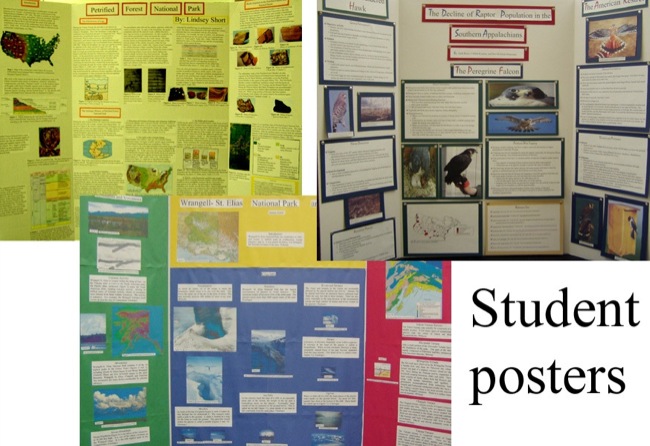




 Most teachers today, at least those of us who've been at it for a decade or so, grew up in a world of relative isolation.